Are you planning to buy a new geyser but are not sure how to choose the right one? Or are you confused about the different types and sizes of geysers available in the market? You’re not alone; many people face the same dilemma. This Geyser Buying Guide will help you understand your options and choose the best geyser for your home.
Selecting the best geyser in India depends on several factors, such as the purpose of use (bathroom, shower, or kitchen), available space, budget, type of geyser (instant or storage), heating time, water pressure, and your overall convenience.
Let’s go through each factor step by step to help you choose the perfect geyser for your needs.
Try to choose the right geyser by answering simple questions without reading any Buying Guide
A geyser, also known as a geyser water heater, uses electricity to heat water for daily household use. But before choosing the right model, it’s important to understand how a geyser works and what its main components are. Knowing these basics will help you make an informed decision when selecting the best geyser for your home.
Why trust this guide: This article is written and kept current by Abdul Khader, who has spent over 4 years repairing, installing, and selling geysers in India. Every recommendation here is checked against BIS safety norms and BEE star-rating standards, not just brand marketing, and the guide is reviewed periodically so prices, brands, and safety checkpoints stay accurate.
How Does an Electric Geyser Water Heater Work?
A geyser water heater consists of three main components: the heating element, the water tank, and the thermostat. Each part plays a vital role in ensuring efficient water heating and maintaining the right temperature. Here’s a quick explanation of how each component works:
Geyser Heating Element
The heating element is the most crucial component of a geyser water heater, aside from the inner tank or container. It’s responsible for converting electrical energy into heat to warm the water. When buying a geyser, it’s important to check the quality of the heating element, as both hard water and very soft water can affect its performance and lifespan.
Most modern geysers feature glass-coated heating elements, which help prevent scaling and corrosion. This protective coating not only enhances heating efficiency but also extends the overall life of the geyser.
Geyser Tank
Geyser tanks store the hot water, so they must be corrosion-resistant and durable. There are two types of geyser water tanks.
- Stainless steel water tanks are traditional models that are now becoming outdated. Their main issues are corrosion and hard water scaling.
- Vitreous Enamel glass-coated geyser water tanks are the latest advancement in geyser technology. They are made by coating a stainless steel water tank with advanced polymers, making the tank corrosion-resistant. This combination is known as a Vitreous Enamel glass-coated geyser water tank. These tanks not only resist corrosion but also prevent hard water scaling. Vitreous Enamel water tanks usually come with a 5–7 year warranty and are quite similar to glasslined coating.
Geyser Thermostat
The geyser thermostat acts as the operating system of the geyser, controlling when to start and stop heating the water. A bimetallic strip, made of steel and copper, is used to convert temperature changes into mechanical movement. The thermostat encloses this strip and operates based on its response.
A good thermostat protects the geyser from overheating and helps reduce power consumption to some extent. However, it’s a misconception that having a thermostat means you can leave the geyser on continuously. Thermostats usually maintain water temperature between 30°C and 60°C. The steps of operation are as follows.
- When you switch on the geyser and the water temperature is around 25°C, the thermostat signals the heating element to start heating the water.
- When the water temperature reaches 60°C, the thermostat signals the heating element to stop heating the water.
- If you forget to switch off the geyser, the water temperature will gradually drop to around 29°C after a few hours due to heat loss.
- The thermostat detects when the water temperature drops below 30°C and signals the heating element to start heating again. This cycle continues until you switch off the geyser.
Strictly Avoid Gas Geysers
Gas geysers were once considered a cost-effective option for heating water. However, we don’t recommend gas geysers due to their serious safety risks. On average, electric geysers cost around 80 paisa to heat water, while gas geysers cost about 40 paisa with Aadhaar-subsidized LPG and 80 paisa without subsidy. As reported by The Hindu and The Times of India, safety concerns have led to fewer brands manufacturing gas geysers today. For a detailed comparison, read our guide — “Which is Better: Gas Geyser or Electric Geyser?”
Buy Branded Electric Geyser Water Heaters Only
One key tip for selecting the best geyser is to always choose a branded model. Branded geysers offer safety, warranty, and reliable customer support, whereas buying an unbranded geyser is like risking your hard-earned money on unstable investments.
While unbranded geysers may appear cheaper, they often don’t meet safety or quality standards. Always buy a geyser that discloses its inner tank material, as the tank is the core component of the geyser. Additionally, avoid models that consume more electricity than necessary.
Choosing a geyser with an ISI mark can also help reduce maintenance costs. According to Indian standards, products without an ISI mark often lead to higher expenses for spare parts like thermostats and heating elements, as well as service charges, depending on the brand and availability.
Electric Geyser Water Heater Types
Instant Geyser vs Storage Geyser Quick Comparison
| Feature | Instant Geyser | Storage Geyser |
|---|---|---|
| Wall space | Breaks during the bath. Geyser releases a maximum of 6 liters of water and needs to wait for more water during bathing | It occupies a large wall-mounted space |
| Delay | Hot water comes immediately when you switch on the geyser | Need to wait up to 5 minutes for water to heat up |
| Convenience | A little less, the 10-liter storage geyser price is 6K – 8K | No breaks during the bath, get all the water before the bath |
| Geyser Price | A little higher, the 6-liter instant geyser price is 6K – 8K | A little less, 10-liter storage geyser price is 6K – 8K |
| Water heating cost | Considered little more than hot water is used after some time. | Best suited for |
| Washing kitchen utensils, hand washing, and bathing using a bucket | 1, 3, 6, and 10 liters | Bathing using a bucket and bathing using a shower |
| Available geyser size | Considered a little low | 6 – 35 liters |
| Life span | Considered a little low | A little less, the 10-liter storage geyser price is 6K – 8K |
| Example | Crompton InstaBliss 3-L Instant geyser | Bajaj 15L storage geyser |
The Geyser Size
Selecting the best geyser requires considering the geyser size. The ideal geyser size should match the volume of hot water needed at once. Proper geyser sizes provide enough heat for immediate use. Read How to Calculate Geyser Size for more details.
Geyser Size Calculator
| Family Size | Purpose of Hot Water | Geyser Type | For washing kitchen utensils or for hand washing |
|---|---|---|---|
| 2-3 members | For washing kitchen utensils or for hand washing | Instant Geyser | 6 liters |
| 2-3 members | For bathing, using a bucket | Storage Geyser | 10 Liters to 15 Liters |
| 2-3 members | For bathing, using a shower | Storage Geyser | 25 Liters |
| 2-3 members | For bathing, using a bucket | Instant Geyser | 1 Liter to 3 Liters |
| 4-8 members | For bathing, using a bucket | Instant Geyser | 6 liters |
| 4-8 members | For bathing, using bucket | Storage Geyser | 25 Liters |
| 4-8 members | For bathing, using a shower | Storage Geyser | 25 Liters |
| 4-8 members | For bathing, using a bucket | Instant Geyser | 1 Liter to 3 Liters |
Geyser Wattage
Another key factor in selecting the best geyser is its wattage. As explained in our geyser buying guide, higher wattage heats water faster; for example, a 4.5 kW instant geyser warms water quicker than a 2 kW geyser. In some cases, a 4.5 kW instant geyser can also save electricity by providing the required hot water efficiently and reducing wastage.
Popular Geyser Articles
- Geyser vs Immersion Rod: Which Is Better for You?
- Geyser for High Rise Building
- Geysers for Hard Water
- Can we use Instant Geyser for Bathroom?
- Why Does a Geyser Switch Melt?
Geyser for Hard Water
Hard water can reduce the lifespan of a geyser. The best solution is to choose a corrosion-resistant water tank, like a Vitreous Enamel water tank geyser. To protect other components, like the heating element, use a water softener. Connect the water input to the softener, and then feed the softened water into the geyser. This prevents damage and ensures efficient operation. Read more at Geysers for Hard Water.
Geyser Water Heater for High Rise Buildings
If you live in a high-rise building, choosing a geyser with a strong tank is essential. According to our Geyser Buying Guide, the ideal geyser for high-rise buildings should have a rated pressure of at least 6 bars and include a geyser pressure control valve. This valve releases excess pressure to prevent geyser tank damage. A glass-lined coated inner tank is also recommended, as it can withstand high pressure effectively. Read more at Geyser for High Rise Building.
Kitchen Geysers
Electric instant geysers with a capacity of 1 to 3 liters are ideal for kitchen use, where you need hot water instantly for cleaning. Waiting 5 minutes for a storage geyser to heat water isn’t practical for quick tasks like washing utensils or cups. Also, ensure you have enough wall space to mount the instant geyser safely.
Horizontal Geysers
Traditionally, geyser water heaters are vertically mounted, while horizontal geysers are newer in the market. A vertical geyser requires at least two feet of vertical wall space. If your bathroom has a low ceiling, false ceiling, or attic, you may not have enough room for vertical installation. In such cases, a horizontal geyser is a better choice. Read more at Difference Between Vertical and Horizontal Geyser.
Solar Geysers
A solar geyser is the best choice if you live in an independent house with your family. According to our Geyser Buying Guide, solar geysers can provide hot water to the entire home without adding to your electricity bill. Although the initial investment is high, it pays off in the long run. However, solar geysers are not ideal for large apartments, as they require dedicated rooftop installation space.
Best Geyser Water Heater Brands
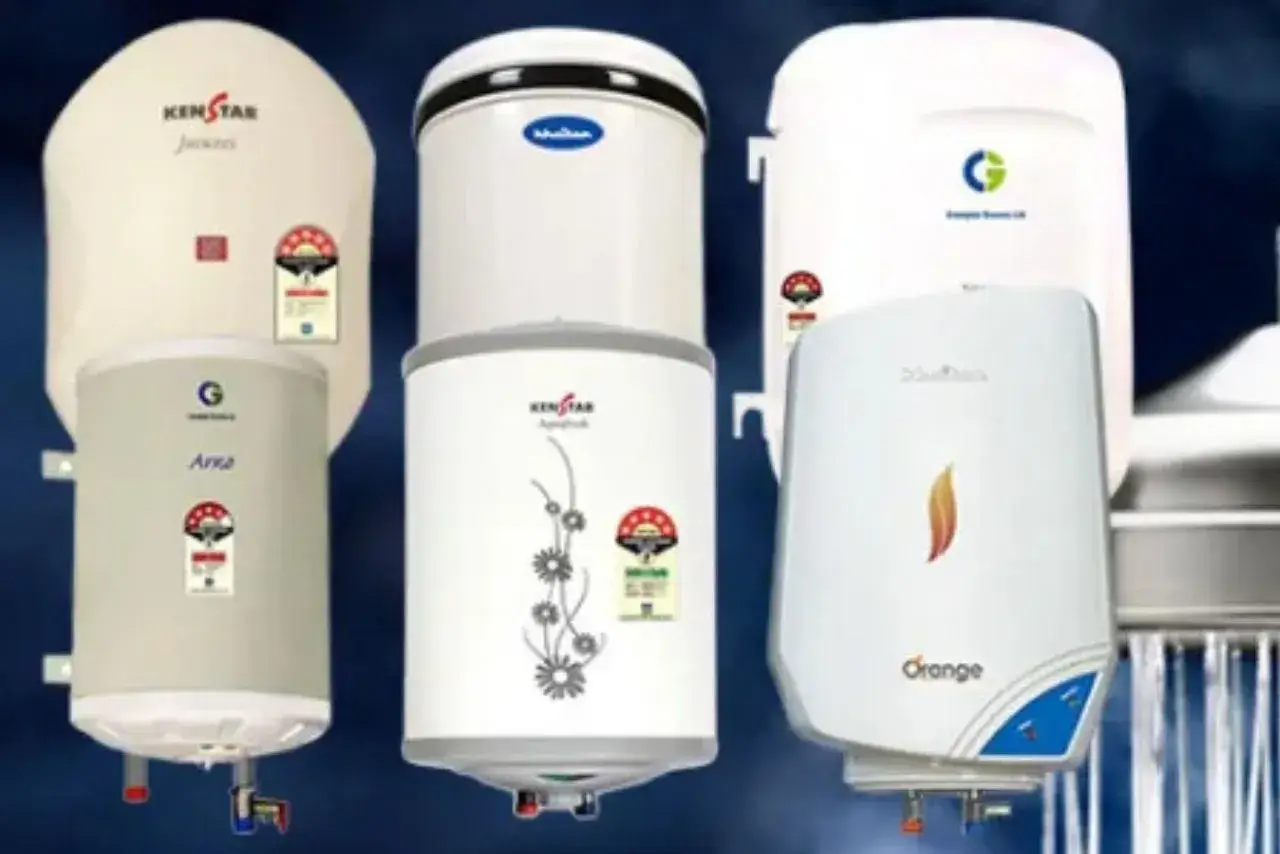
Another important tip to select the best geyser is to choose from trusted geyser manufacturers with a strong reputation and reliable service. Bajaj, Havells, Racold, V-Guard, AO Smith, Kenstar, and Crompton are among the most popular brands, offering geysers in different capacities such as 10L, 15L, and 25L.
Before buying, check if the manufacturer provides installation service. Even if it’s paid, it’s worth opting for professional installation instead of hiring a local plumber. You can easily buy these geysers online from Amazon or Flipkart for convenience and better deals.
Geyser Installation
One of the most important things to remember is to avoid local plumbers for geyser installation, as they often don’t follow proper safety standards or best practices. Always install your geyser through an authorized service center. Most geyser manufacturers offer professional installation services for better safety and reliability.
You’ll also need a few accessories for proper setup, such as two steel ribbed pipes, one angle valve brass, one connection nipple, and related fittings. Read more at Fast Track Guide on Geyser Installation.
Geyser Safety Features to Check Before Buying
A geyser sits in a wet bathroom and runs on electricity, so safety features matter as much as capacity or price. Before you pay for any model, check for the following:
- Thermal cut-out / thermostat safety switch: Cuts power automatically if the water gets too hot, so the tank doesn’t overheat.
- Pressure release valve: Lets out excess pressure inside the tank instead of letting it build up. Non-negotiable on a storage geyser.
- Dry heat / burnout protection: Stops the heating element from running if the tank is empty, one of the main causes of a burst geyser.
- Earthing terminal: A properly earthed geyser routes stray current safely away from you instead of through the water.
- IPX4 water-resistance rating: Confirms the unit can handle splashes without risking a short circuit.
- ISI/BIS mark: Confirms the geyser meets Indian safety standards for electrical appliances.
If you want to understand what actually goes wrong without these safeguards, read Reasons Why a Geyser Could Burst.
How Much Does a Geyser Cost in India?
Prices vary by brand, tank material, and star rating, but here’s a rough starting point for budgeting:
| Geyser Type | Typical Capacity | Price Range |
|---|---|---|
| Instant geyser | 1–3 litres | ₹2,500 – ₹6,000 |
| Small storage geyser | 6–10 litres | ₹5,000 – ₹9,000 |
| Mid-size storage geyser | 15–25 litres | ₹8,000 – ₹18,000 |
| Premium/smart storage geyser | 25 litres and up | ₹15,000 – ₹25,000+ |
| Solar geyser (with installation) | 100 litres and up | ₹15,000 – ₹40,000+ |
A higher price usually buys a better tank coating, a higher BEE star rating, and a longer warranty, not just a bigger brand name. If cutting your power bill is the priority, Which Geyser Consumes Lowest Electricity breaks down which specs actually save money.
Warranty and After-Sales Service to Check
Warranty terms tell you a lot about how confident a brand is in its own product. Before you buy, check these three things:
- Heating element warranty: Usually 2 to 5 years. This is the part most likely to need replacement.
- Tank warranty: Look for 5 to 7 years on glass-lined or Vitreous Enamel tanks. This covers the most expensive part to replace.
- Service network: Check that the brand has an authorized service center near your pincode before you buy, not after something breaks.
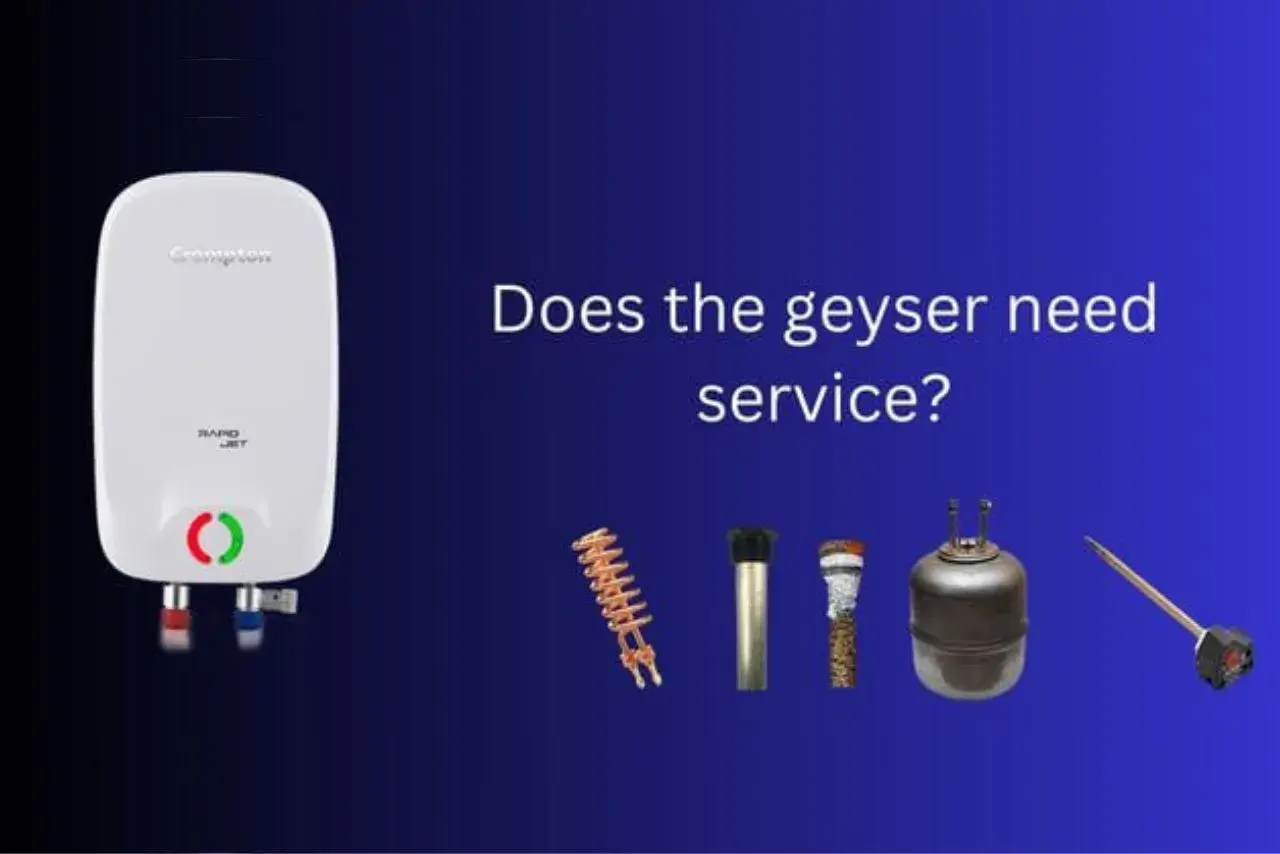
Keep your invoice and installation record. Most brands ask for proof of professional installation before honoring a warranty claim, especially for a burst or leak. For what a service visit should cover, see Does a Geyser Need Service?
Best Geysers
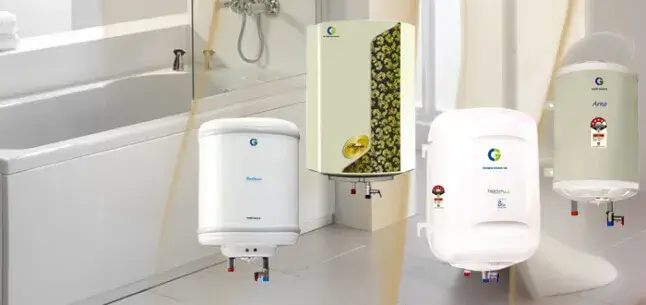
- AO Smith HSE-VAS 15-Litre Storage Water Heater
- AO Smith HSE-VAS-X-025 Storage 25 Litre Water Heater
- Crompton Arno Neo 25-L 5 Star Rated Storage Water Heater
- AO Smith 25 L Storage Water Horizontal Geyser (White, HAS-25)
- AO Smith HSE-HAS 15-Litre Horizontal Storage Water Heater
- Havells Instanio 3-Litre Instant Geyser
- AO Smith SGS-GREEN-006 Storage 6 Litre Vertical Water Heater (Geyser)
- Crompton Arno Neo 6-L 5 Star Rated Storage Water Heater
- Bajaj Flora 3L-3KW Instant Water Heater 3 L Instant Water Geyser
- Racold 1 L Instant Water Geyser (Pronto Neo SS 1V 3KW, White)
How to Make Your Geyser Smart?
Do you want hot water ready the moment you wake up? Thanks to IoT and home automation, it’s now possible to control your geyser from your smartphone. Simply plug your geyser into a Wipro Wi-Fi Smart Plug or similar device and set daily schedules to turn the geyser ON/OFF automatically.
For instance, if you wake up at 7:00 AM, you can schedule the geyser to turn on at 6:30 AM and switch off at 7:30 AM using apps like Oakter. This ensures you always get hot water when you need it, and never forget to switch off your geyser again.
How to Reduce Geyser Electricity Consumption?
When buying a new geyser, always check the BEE star rating and choose the highest-rated model for better energy efficiency and lower electricity bills. As highlighted in our geyser buying guide, apart from brand and capacity, following a few geyser usage guidelines can help you save power and extend your geyser’s life.
1. Standing Losses
Standing losses refer to the heat lost through the geyser’s surface even when it’s not actively heating water. High-quality geysers with good insulation and a higher BEE rating have lower standing losses, making them more energy-efficient.
2. Volume of Hot Water Used
Your electricity consumption directly depends on how much hot water you use. The more hot water you draw, the more power the geyser consumes to maintain the desired temperature.
3. Thermostat Temperature Setting
Most geysers have a default thermostat setting of around 60°C, but some models allow you to adjust it manually. Setting the temperature slightly lower can reduce power consumption without compromising comfort.
4. Bathing Water Temperature
The temperature of the water you prefer for bathing also affects electricity usage. The higher the desired water temperature, the more energy your geyser will consume to heat it.
5. Input Water Temperature
Electricity usage also depends on your geographical location. In colder regions, where the input water temperature is low, the geyser requires more energy to heat water compared to warmer areas.
How to Increase Geyser Water Pressure?
If you have high water pressure in all faucets but low pressure from the geyser, it’s a clear sign that your geyser might not be functioning properly. Over time, fluoride or sediment deposits, which appear as white coatings on the geyser’s heating rods, can accumulate and restrict the water flow. To fix this issue, it’s best to contact a professional electrician who can safely remove the sediments and restore your geyser’s performance.
As highlighted in our geyser buying guide, regular maintenance and checking for sediment buildup can significantly improve your geyser’s efficiency and lifespan.
However, if you experience low water pressure in all bathroom taps, the problem may not be with the geyser itself. In such cases, installing a pressure pump can be an effective solution. This electric pump automatically turns on and off whenever you open or close the geyser tap, ensuring a steady and strong water flow every time.
What Happens When a Geyser is ON with No Water?
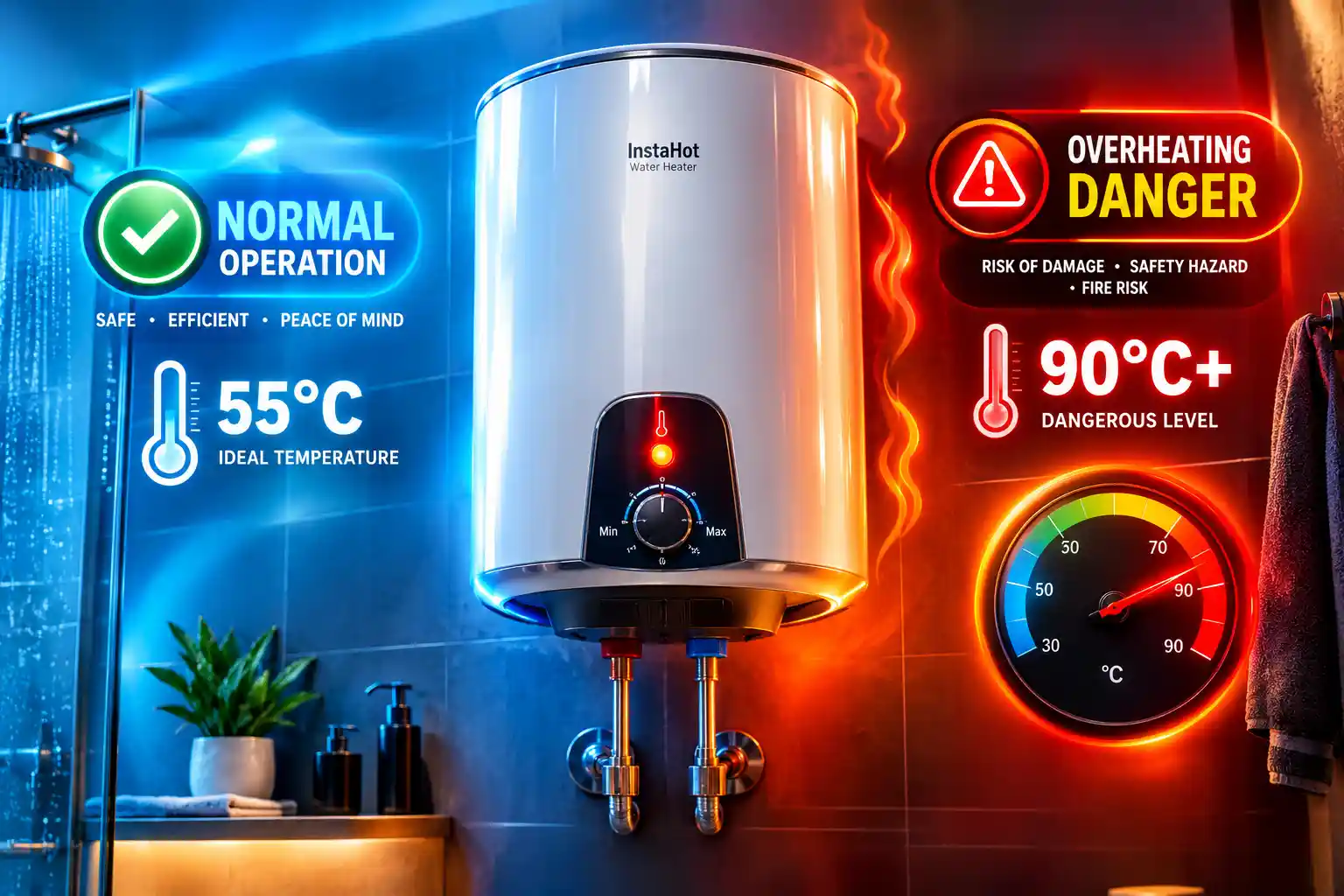
Allow me to provide a straightforward answer. The thermostat, also known as the thermal cut-off switch, monitors the temperature of the geyser’s inner tank and cuts off electricity if the water overheats. While this usually prevents problems, it’s not foolproof. If the thermostat malfunctions, the inner tank may overheat, increasing the risk of a blast. As noted in our geyser buying guide, understanding thermostat function and safety features is essential when choosing the right geyser.
Learn more about What Happens in An Electric Geyser if There Is No Water in The Tank in our other post.
Frequently Asked Questions
Which is better for a home: instant or storage geyser?
An instant geyser suits a kitchen or a single tap where you need hot water right away in small amounts. A storage geyser suits bathrooms and showers where more than one person needs hot water back to back. Many homes use both, an instant geyser in the kitchen and a storage geyser in the bathroom.
What size geyser is right for a family of four?
For bucket baths, a 15 to 25 litre storage geyser usually covers a family of four. For shower use, go with 25 litres. See How to Calculate Geyser Size for an exact number based on your usage.
Is paying extra for a 5-star BEE rating worth it?
Usually yes, if you plan to keep the geyser for several years. A 5-star model has lower standing losses, meaning it wastes less heat when idle, and that difference adds up on your electricity bill over time.
How long does a geyser usually last?
A well-maintained geyser with a glass-lined or Vitreous Enamel tank typically lasts 8 to 10 years. Hard water, skipped servicing, and a weak heating element can cut that short.
Can I install a geyser myself?
We don’t recommend it. Geyser installation involves electrical wiring, earthing, and plumbing fittings that need to be done to code. Use an authorized service center or a certified electrician instead of a local plumber. Our Geyser Installation Guide covers what a proper setup should include.
Is it safe to drink water heated in a geyser?
It’s not recommended as a regular habit. Geyser tanks aren’t designed or maintained the way drinking-water systems are. Read Is it Safe to Drink Water from Geyser for the full explanation.