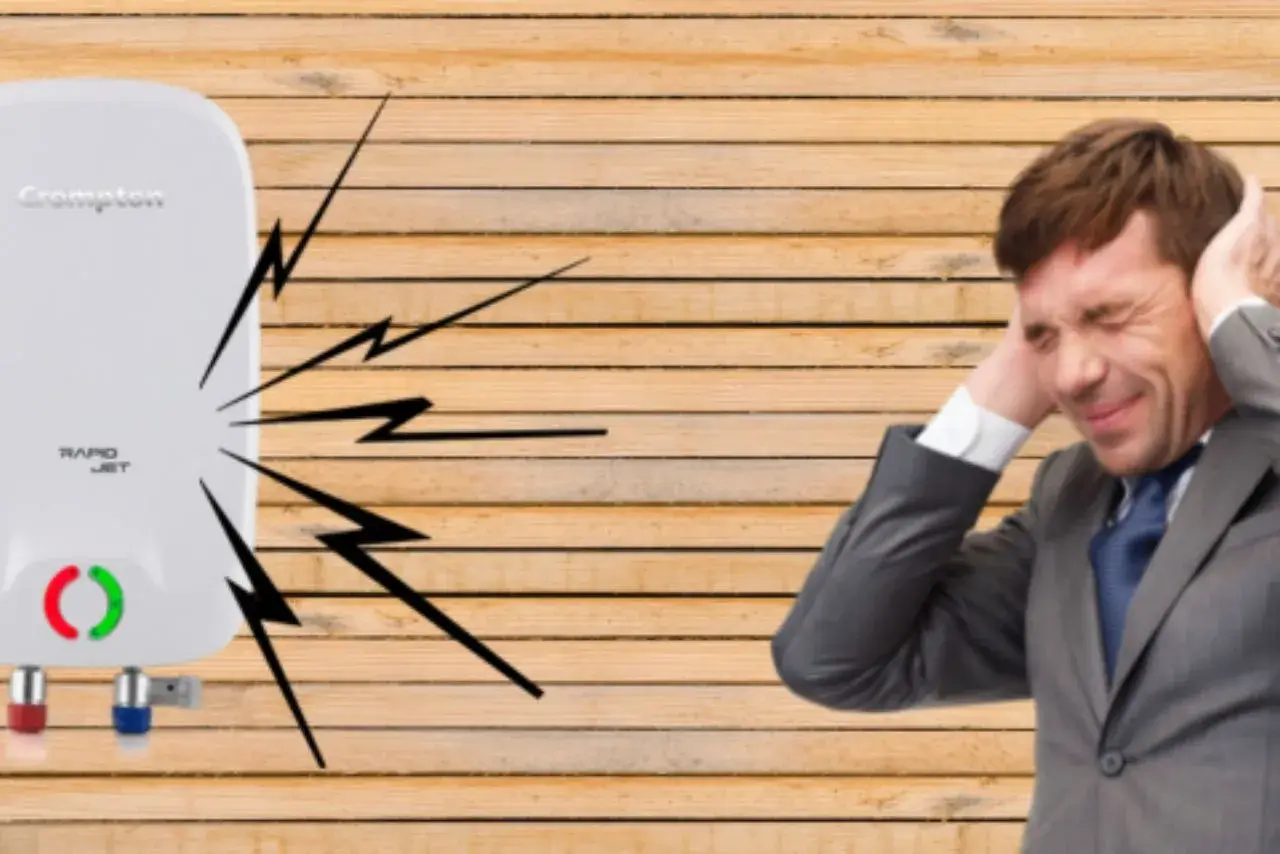
Although a geyser making noise is very common, it’s a sign that something is not going well inside the geyser and needs to be addressed before it turns into a major accident or leak. Geyser noise often signals sediment buildup. Another reason might be irregular water pressure, airlock in the valve might be. In India, where geysers are widely used in winter, it’s especially important to pay attention to these signs.
Why trust this guide: This article is written by Abdul Khader, who has spent over 4 years repairing geysers in Indian homes and has heard every one of these noises on real service calls. The causes and fixes below reflect what’s actually behind each sound, not a generic list.
Quick answer: Popping or rumbling almost always means sediment. Banging usually means water hammer or a loose part. Hissing can mean a small leak. Work through the causes below to match your specific sound, and see the emergency section further down if you also notice a bulging tank or a constantly dripping safety valve.
Is Some Noise Normal?
A soft hiss or occasional crackle while the water is heating is generally normal, that’s just water warming up inside the tank. What isn’t normal is a noise that’s loud, new, getting worse over time, or accompanied by anything visible like a leak or a bulge in the tank. The sections below help you tell the difference.
Try to choose the right geyser by answering simple questions without reading any Buying Guide.
Why Does The Geyser Make Noise?
Sediment Buildup:
Over time, sediment buildup on the heating element is a common thing. However, if you live in an area with hard water, this becomes much faster. While heating hot water, bubbles stuck in the sediment and make popping and hissing sounds. Due to sediment heating element loses heating efficiency and tries hard to heat the water.
Solution:
Need to remove accumulated sediment. Turn off the electricity supply and cold water inlet. Drain out water by an open pressure valve located at the geyser’s bottom, as shown in the image. Repeat this process three to four times. If the problem persists after that, get a professional geyser technician or plumber to check it.
Loosen Heating Element:
Loosen the heating element from the body makes vibrations and a humming noise. Over time, the heating element’s screws, nuts, and bolts loosen from the body. On electricity supply, loosened body parts start vibrating and collide with other parts.
Solution:
Remove the plastic cover present at the geyser’s bottom using a screwdriver. Tighten the visible nuts and bolts using a screwdriver or cutting pliers. Make sure to cut the electricity supply while doing this.
Faulty Valves and Water Hammer:
A valve that isn’t fully open, or one that’s stuck halfway, forces water to squeeze through a narrower gap than it should, building pressure inside the tank and causing screaming, screeching, or tapping sounds. Sharp banging or knocking, sometimes called water hammer, is different: it happens when a tap is closed abruptly and the moving water has nowhere to go, sending a pressure shockwave back through the pipes that knocks against the wall or fittings.
Solution:
Check that the water inlet valve is fully open. If it feels like it was stuck in half, take a professional plumber’s help to replace it with a new one. For water hammer specifically, closing taps more gradually helps in the short term, and a plumber can fit a water hammer arrestor on the line for a permanent fix.
Trapped Air in the Pipes:
Gurgling or sputtering sounds, especially right after the geyser has been switched on or the plumbing has been worked on, often mean there’s air trapped in the pipes rather than a fault with the geyser itself.
Solution:
Run the hot tap at full flow for a minute or two with the far end open, this lets trapped air work its way out through the tap instead of the pipe. If the sound keeps coming back after this, it’s worth having a plumber check for a leak that’s letting air back into the line.
Hissing or Sizzling (Possible Leak):
A hissing or sizzling sound usually means water is dripping onto a hot surface, most often the heating element itself. Occasionally this is just condensation, but it can also point to a small internal leak from a pipe fitting or a worn gasket seal.
Solution:
Check around the base and fittings of the geyser for any visible dampness. If you spot one, or the hissing doesn’t go away, have a technician inspect it rather than waiting, a small leak onto an electrical component isn’t something to leave unaddressed. Our Geyser Repair guide covers what a repair like this typically costs.
When Geyser Noise Is an Emergency
Most geyser noise is an annoyance, not a crisis. Treat it as urgent, and stop using the geyser until it’s checked, if loud banging or rumbling shows up alongside any of these:
- A visibly bulging or warped tank
- Rust streaks running down the outside of the tank
- A pressure relief valve that’s dripping constantly rather than occasionally
Together, these point to a tank under more stress than it’s built for, which is exactly how a geyser bursts. Our guide on Reasons Why a Geyser Could Burst covers what leads up to that point.
Frequently Asked Questions
Is it normal for a geyser to make some noise?
A soft hiss or occasional crackle while heating is normal. Loud, new, or worsening noise usually isn’t, and it’s worth investigating rather than ignoring.
How often should I flush my geyser to stop the noise?
Once a year for most homes, and twice a year in hard water areas, sediment builds up faster there. See Geysers for Hard Water for a full maintenance schedule.
Can I flush the tank myself?
You can, but it involves working with a pressurized tank that’s connected to electricity, so turn off the power and the cold water inlet first, and don’t switch the power back on until the tank is completely refilled. If you’re not confident doing that, a technician can do it quickly during a routine visit, see Does a Geyser Need Service? for what to expect.
Why does my geyser only make noise sometimes?
Intermittent noise, especially banging tied to opening or closing a tap, usually points to water hammer rather than sediment, which tends to be more consistent. Trapped air can also come and go depending on recent plumbing work or water pressure changes.
Popular Geyser Articles
- Geyser vs Immersion Rod: Which Is Better for You?
- Geyser for High Rise Building
- Geysers for Hard Water
- Can we use Instant Geyser for Bathroom?
- Why Does a Geyser Switch Melt?
Conclusion
Sediment buildup, loose parts, and faulty valves contribute to annoying geyser noises and can affect heating efficiency. Regularly cleaning sediment, tightening the heating element, and replacing faulty valves can help prevent geyser noise effectively.