If you are getting high pressure in all taps except the geyser, it might be due to a malfunction in the geyser. Most of the time, fluoride, sediment, and white-coloured material deposits on geyser heating rods and reduce water flow. This is one of the common issues discussed in How to Increase Geyser Water Pressure guides. Here is one YouTube video showing sediment deposits in geysers. In this case, contact a certified geyser technician or plumber, who can safely remove the sediment from the tank and filters.
Try to choose the right geyser by answering simple questions without reading any Buying Guide.
Why trust this guide: This article is written by Abdul Khader, who has spent over 4 years repairing and servicing geysers in Indian homes, including plenty of low-pressure calls that turned out to be a five-minute fix rather than a real fault. The checklist below is the same one used on a real service visit before anything gets taken apart.
Quick answer: Most low geyser pressure comes from a clogged inlet filter, trapped air in the tank, or a partially closed main valve, all fixable in a few minutes. If the problem is low pressure throughout the house rather than just the geyser, a pressure pump is usually the answer.
A Safe DIY Checklist Before You Call Anyone
Most low-pressure problems come down to something small, not a faulty geyser. Work through this list before assuming you need a technician or a pressure pump:
- Turn off the geyser’s power supply before checking anything. Never open a filter or fitting while it’s switched on.
- Check the cold tap at the same point. If cold pressure is fine and only hot water is weak, the issue is inside the geyser or its immediate pipework, not your building’s main supply.
- Make sure the main water supply valve to the geyser is fully open. A partially closed valve is one of the most common, and easiest to miss, causes.
- Clean the inlet and outlet filter mesh. Sediment and mineral deposits collect here first and choke the flow before the water even reaches the tank.
- Open the hot tap fully for a moment to release any trapped air in the tank, air pockets can make the flow sputter or feel weak.
- Check the inlet and outlet pipes for tight bends, kinks, or damage that could be restricting flow.
- If you’re in a multi-storey building, check whether the geyser has a non-return valve (NRV). It’s meant to stop hot water flowing backward, but on a ground floor with already-low pressure, it can slow things down more than it helps.
If you’ve gone through all of this and pressure is still weak, the issue is likely a faulty safety valve or a damaged internal part, and that’s when it’s worth calling a technician rather than continuing to take things apart yourself.
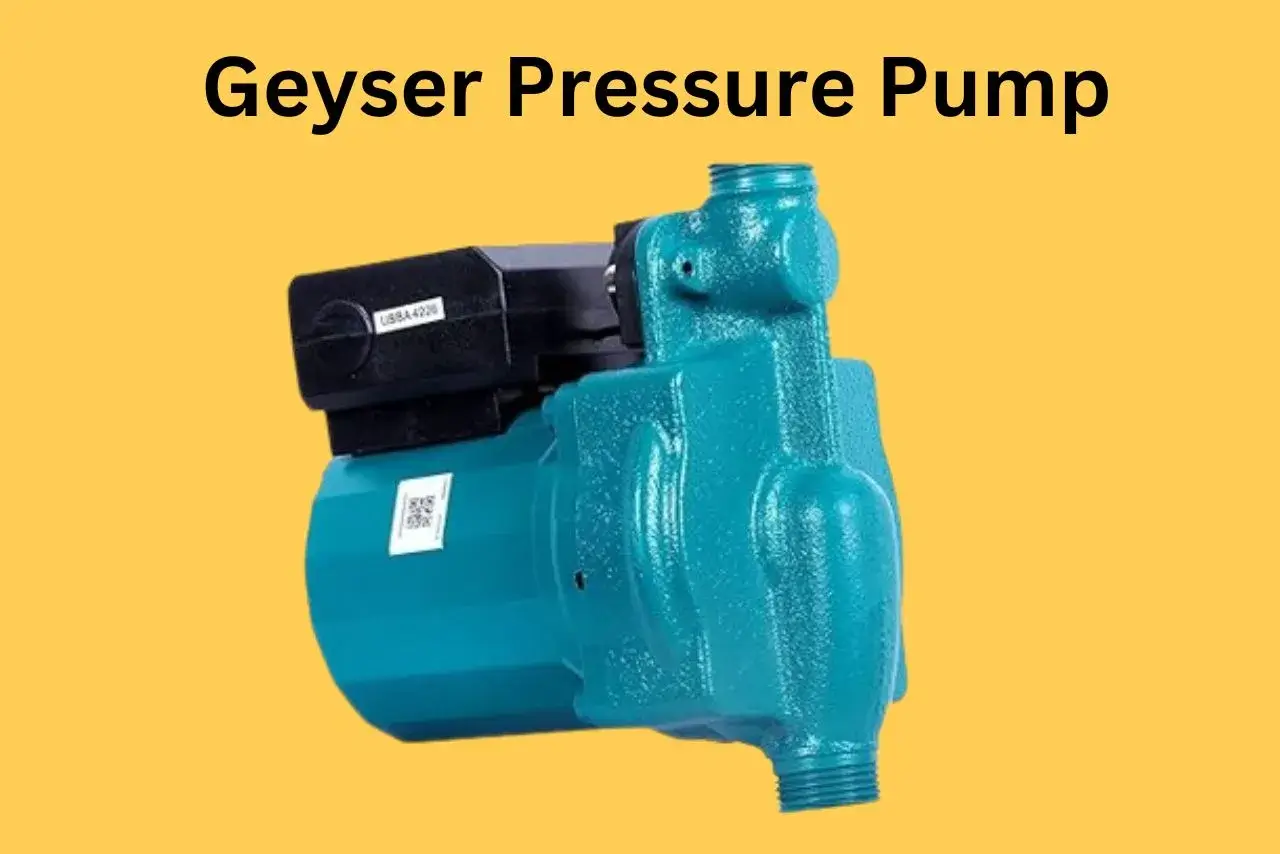
If all your bathroom tap water pressure is low, go for “Pressure-Pump”. Pressure-pump is an electric pump that automatically turns on/off when you open the geyser tap.
How to Measure Your Water Pressure
Before you decide you need a pump, it helps to know your actual pressure rather than going by feel. A simple inline pressure gauge, available cheaply at any hardware store, screws onto an outdoor tap near where your main supply enters the home. Normal household pressure falls between 40 and 50 psi. Below that, most fixtures, including your geyser, will feel noticeably weak, and a booster pump is a reasonable next step.
How to Increase Geyser Water Pressure Pump Installation
Geyser-Only Pressure Pump
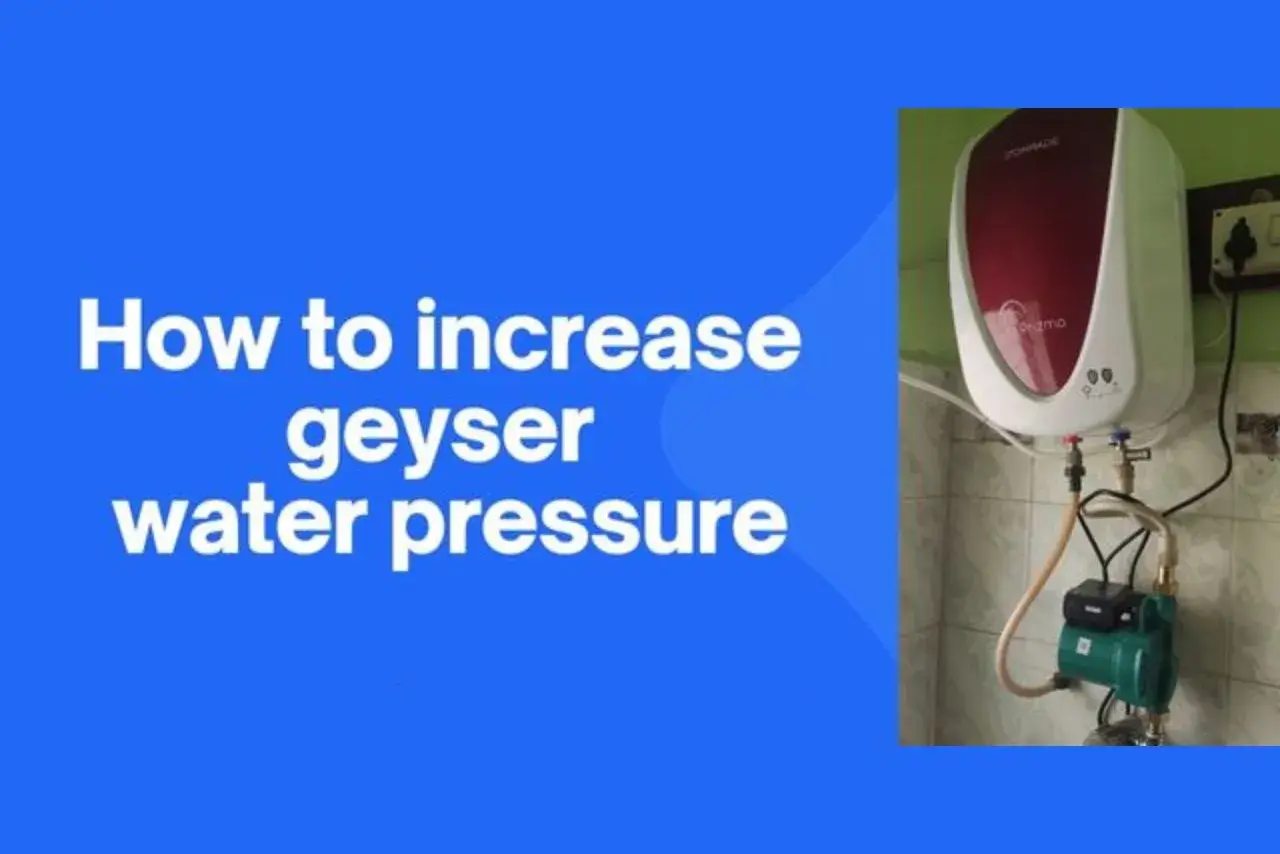
The pressure pump has to attach to the geyser water inlet (cold water pipe). An on-tap open pressure pump recognizes and pushes the water with pressure into the geyser, eventually increasing the geyser’s water pressure.
On the geyser, the tap closes, the pressure pump automatically shuts off, and consumes no electricity. This solution works very well, particularly for geyser water as a pressure pump serving only geysers.
Whole-House Pressure Pump
But if you want to increase the whole home tap water pressure, go for the big pressure pump, which has to fit a nearby water tank, on the terrace. This type of pressure pump serves the whole home.
When you open any tap – kitchen sink, geyser, or common faucet pressure pump automatically powers on and pushes pressurized water into pipes, eventually increasing the water pressure in all taps as well as in the geyser.
Other Fixes Beyond a Pressure Pump
A pump isn’t always the right first step. A few other things affect pressure just as much:
- Replace old GI pipes with CPVC or UPVC pipes. Older galvanized iron pipes corrode and narrow internally over time, which chokes flow even when the supply pressure itself is fine.
- Reduce the number of bends in the pipeline. Every sharp bend adds resistance. Where a bend is unavoidable, a slightly wider pipe there helps offset the loss.
- Check your overhead tank’s height and delivery line slope. Pressure in a gravity-fed system depends on how high the tank sits above the outlet, and a delivery line that runs slightly uphill before reaching the tap can trap air and choke flow. If you live in a high-rise, our Geyser for High Rise Building guide covers how height affects pressure in more detail.
Frequently Asked Questions
Why is my geyser’s hot water pressure low but cold water is fine?
This almost always points to something inside the geyser itself or its immediate pipework, most often a clogged inlet filter, trapped air, or sediment buildup, rather than a problem with your building’s main water supply.
Is it safe to clean the geyser filter myself?
Yes, as long as you switch off the power and close the water supply first. If you’re not comfortable opening the fitting yourself, a technician can do this quickly during a routine service visit. See Does a Geyser Need Service? for how often that’s worth scheduling.
Will a pressure pump increase my electricity bill?
Barely. A geyser-only pressure pump switches on only while the tap is open and draws relatively little power, so the added cost is small compared to the geyser’s own electricity use.
Does hard water affect geyser water pressure?
Yes. Mineral deposits build up in filters, valves, and pipework over time, which is a common cause of gradually worsening pressure. Our Geysers for Hard Water guide covers how to prevent it.
Related Searches
People researching this topic also search for: geyser water pressure low fix, how to increase hot water pressure at home, geyser pressure pump price, water pressure booster pump for bathroom, geyser inlet filter cleaning, non-return valve geyser problem, overhead tank water pressure solution, CPVC pipe for low water pressure, geyser sediment removal, water pressure gauge PSI reading, geyser pressure pump installation cost, and best pressure pump for home in India.
Popular Geyser Articles
- Geyser vs Immersion Rod: Which Is Better for You?
- Geyser for High Rise Building
- Geysers for Hard Water
- Can we use Instant Geyser for Bathroom?
- Why Does a Geyser Switch Melt?