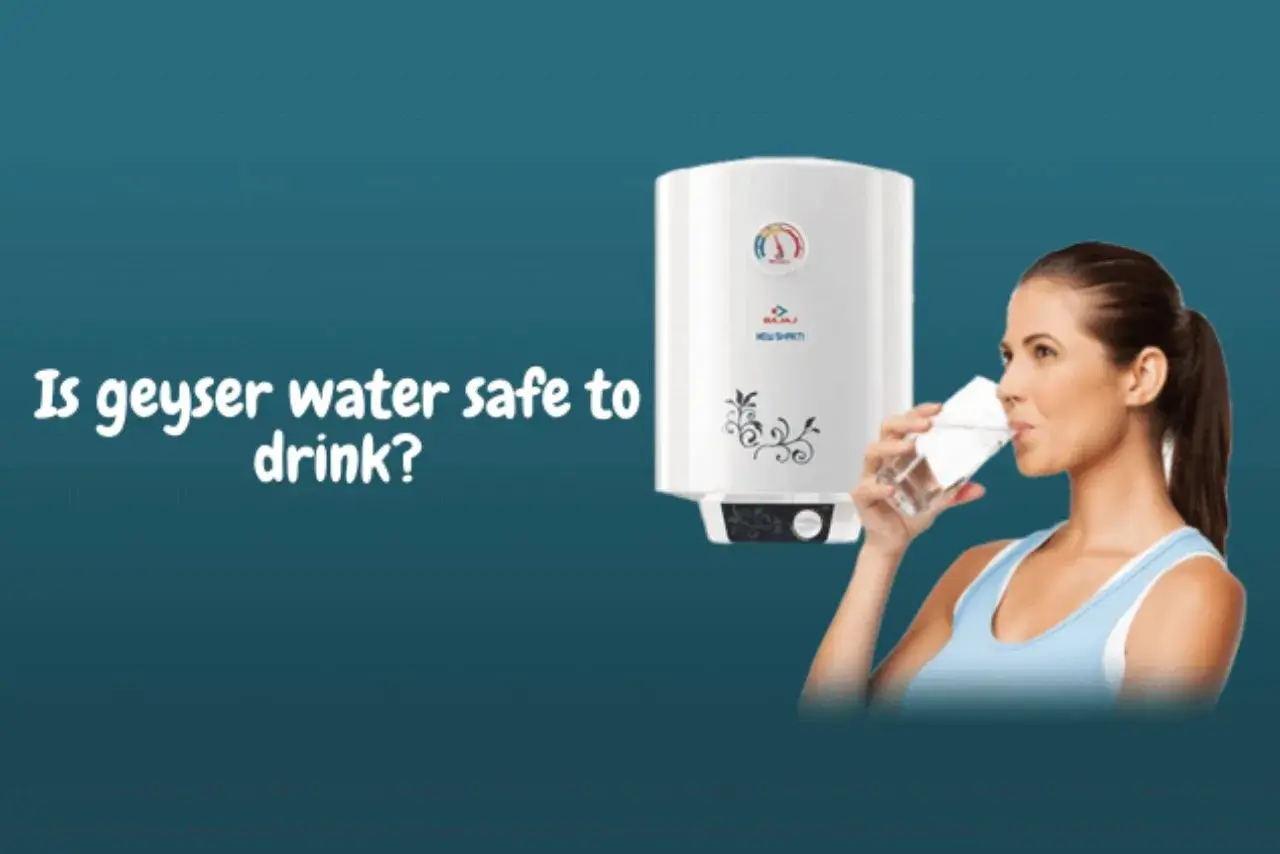
Straight to the point, Is It Safe to Drink Water from a Geyser? Drinking boiled water from a geyser is not recommended. During the heating process, impurities such as sediment, limescale, rust from plumbing pipes, and metal particles quickly dissolve in hot water. Even worse is that hot water dissolves impurities like metal particles, especially lead, more rapidly. Consequently, water heated in a geyser contains a high concentration of impurities. While geyser water may be considered safe for bathing, it is not suitable for drinking due to these impurities.
Try to choose the right geyser by answering simple questions without reading any Buying Guide.
Why trust this guide: This article is written by Abdul Khader, who has spent over 4 years servicing geysers and has seen firsthand what settles at the bottom of a tank that’s gone unflushed for a few years. The guidance below draws on that, plus published safety guidance including the US EPA and hard water research relevant to Indian homes.
Quick answer: No, don’t drink water straight from a geyser’s hot tap, whether it’s an instant or storage model. Use it for bathing and washing only. For drinking or cooking, use filtered cold water, boiled separately if needed.
Can We Drink Water From Geyser
Old Metal Pipes and Lead Risk
In India, it may be convenient to use hot water from the kitchen’s geyser tap, but it is generally unsafe. It has a high chance of being contaminated by plumbing pipes, geyser metal parts’ impurities, and glass coating loss particles. In India, many homes had old, rusted metal water pipelines that contaminated water with rust and lead.
PVC Pipes and Plastic Leaching
Lead particles can quickly dissolve in hot water. However, plumbing lines made up of PVC(Plastic) are not considered safe. Hot water flows from the geyser to the tap through PVC pipes. Due to heat exposure, PVC pipes release plastic particles and plastic odour in water.
An official website of the United States’ EPA(Environmental Protection Agency) recommends not using geyser hot water for drinking, cooking, or making baby bottle milk. Never use hot tap water for infant formula, since infants are especially vulnerable to trace metals.
Bacterial Growth at Low Temperatures
There’s a health risk here beyond metals and sediment. If a geyser’s thermostat is set below about 60°C, the water sitting in the tank can become a comfortable temperature for bacteria such as Legionella to grow, particularly in a tank that isn’t used every day. This is a genuine reason storage tanks aren’t a drinking water source, on top of the sediment and corrosion issues. You can read more about how this is monitored from the CDC’s overview of Legionella.
The Anode Rod Factor
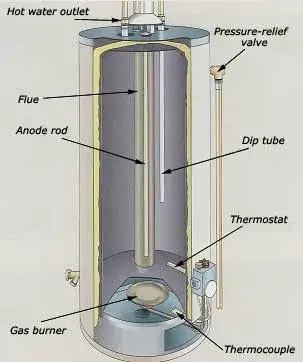
In general, a geyser contains an anode rod made up of magnesium and zinc. The purpose of this rod is to protect the geyser tank from corroding by corroding itself. However, a corrosive anode rod doesn’t affect the bathing experience, but it is unsafe for drinking and cooking due to the high amount of magnesium and zinc.
Popular Geyser Articles
- Geyser vs Immersion Rod: Which Is Better for You?
- Geyser for High Rise Building
- Geysers for Hard Water
- Can we use Instant Geyser for Bathroom?
- Why Does a Geyser Switch Melt?
Sediment Buildup Over Time
Over time, sediment(white colour substance) accumulates on the heating element, and loosened sediment will settle on the geyser’s bottom. Open a geyser tank that’s a few years old, and it probably has a thick layer of sediment at the bottom. You can watch the YouTube video below to see how much dirt and rocks build up inside a geyser over time. You are supposed to flush the tank regularly, and our How to Clean a Geyser at Home guide covers exactly how, though in practice, most people never do it.
What to Do Instead
None of this means you need cold showers. A few simple habits keep you covered:
- Use your geyser for bathing and washing only, not for anything you’ll consume.
- For tea, coffee, or cooking, use filtered cold water and boil it separately in a kettle rather than drawing from the hot tap.
- If you have an RO purifier with a hot water dispenser, that’s a genuinely safer source than the geyser, it’s built and certified for drinking water.
- Never use hot tap water for baby formula, infants are far more vulnerable to trace metals than adults.
- Flush and descale the tank on a regular schedule rather than leaving sediment to build up for years. See Geysers for Hard Water for a maintenance schedule if you’re in a hard water area.
Frequently Asked Questions
Is it safe to make tea or coffee with geyser water?
It’s better not to. Boiling doesn’t remove the sediment, trace metals, or minerals already in the water, it only kills some bacteria. Use filtered cold water and boil it separately instead.
Does boiling geyser water make it safe to drink?
No. Boiling can kill some bacteria but doesn’t remove sediment, dissolved minerals, or trace metals like lead or zinc that may already be in the water.
Is an instant geyser safer for drinking water than a storage geyser?
It’s somewhat better since there’s no standing tank of water sitting for hours or days, which reduces the bacterial growth risk and cuts down on prolonged metal contact. It’s still not designed or certified as a drinking water source, so the same general caution applies.
How often should I flush my geyser’s tank?
At least once a year for most homes, and every 6 to 12 months in hard water areas. See our How to Clean a Geyser at Home guide for the steps.
Conclusion | Is It Safe to Drink Water from Geyser
A glass of hot water from a geyser may contain a minute quantity of rust, metal particles, and sediment sludge. Consuming it occasionally, perhaps once or twice, may be acceptable. However, drinking it regularly over the years is considered unsafe.