If you’ve been wondering are solar water heaters worth it, you’re not alone. With electricity prices constantly rising and sunlight available almost year-round across India, switching to a solar water heater seems like a smart move. But does it really pay off?
In India, solar energy adoption has grown rapidly, and several cities and states offer local incentives that make solar water heating more attractive. For many, it is not just about going green, it is about saving money and staying independent of the grid.
Why trust this guide: This article is written by Abdul Khader, who has spent over 4 years installing and servicing water heating systems in Indian homes, including solar setups. The cost figures and subsidy information below are checked against current government sources rather than repeated from older articles.
Quick answer: Yes, for most homes with usable roof space and steady hot water use, a solar water heater pays for itself in 3 to 5 years through electricity savings and keeps saving for 15 to 20 years after that. One thing to know upfront: the central government subsidy specifically for solar water heaters was discontinued back in 2014, so budget on the full purchase price unless your state or municipality currently offers its own local incentive.
In this article, we’ll explore everything from solar water heater cost in India and how it works, to advantages and disadvantages, and even a real example showing how quickly it can pay for itself.
How Do Solar Water Heaters Work?
To understand whether solar water heaters are worth it, it helps to know how they function. A solar water heating system uses sunlight, not electricity or gas, to heat water for daily use.
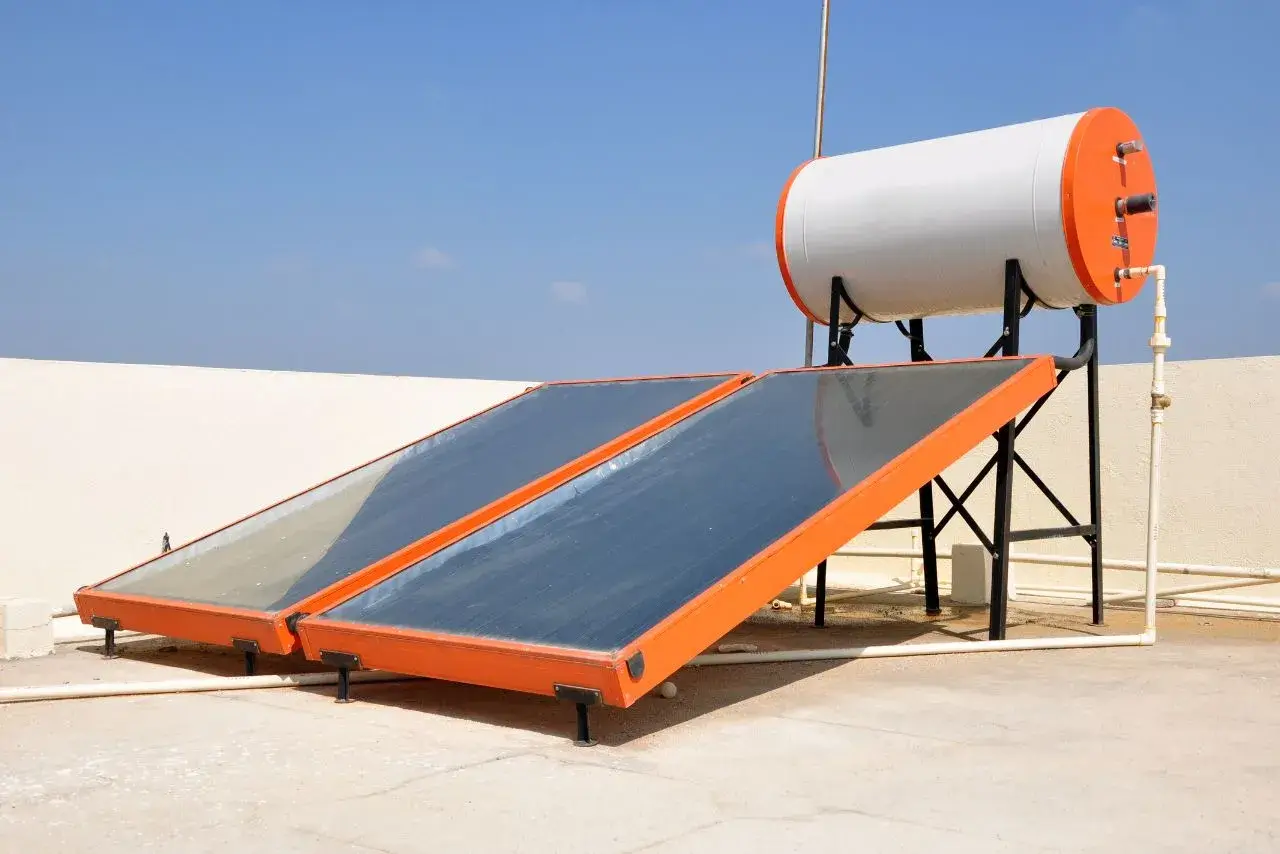
It has three main parts: a solar collector, an insulated water tank, and a piping system. The collectors absorb sunlight and convert it into heat, which warms up the water. This hot water is then stored in the tank, ready for showers, washing, and household chores.
Types of Solar Water Heaters in India
- Flat Plate Collectors (FPC):
These are made with copper and glass, perfect for regions with strong sunlight like Maharashtra, Tamil Nadu, and Gujarat. They’re durable and long-lasting. - Evacuated Tube Collectors (ETC):
These use glass tubes that trap heat efficiently, making them suitable for colder regions like Himachal Pradesh or Uttarakhand. They’re more affordable but can wear faster in hard water conditions.
Both systems are great options for Indian homes, depending on your location and water quality.
Solar Water Heater Cost in India
The cost of solar water heaters in India depends on size, brand, and type. On average:
- 100L (3–4 people): ₹18,000–₹28,000
- 200L (5–6 people): ₹30,000–₹45,000
- 300L (6–8 people): ₹50,000–₹65,000
The initial cost might feel higher than an electric geyser, but once installed, the monthly electricity savings make up for it quickly.
Government Subsidies: What Is Actually Available Today
This is a point where a lot of articles online, and this one previously, get it wrong. The central government’s capital subsidy specifically for solar water heaters was discontinued by the MNRE back on 1 October 2014, due to funding constraints, and it has not been reinstated since. The subsidy many people hear about today, up to ₹78,000 under the PM Surya Ghar scheme, is for solar electricity (PV) panels, a completely different technology from solar water heating.
That does not mean there is nothing available. Some states and municipalities offer their own local incentives, such as a property tax rebate or an electricity tariff discount for households using a solar water heater. These vary by location and change over time, so check directly with your state renewable energy agency or municipal corporation rather than assuming a blanket discount. What MNRE does still do is test and certify solar water heater brands for quality, so buying an MNRE-approved brand remains a genuine quality signal, just not a subsidy guarantee.
My Experience Using a Solar Water Heater in India

Setting up a solar water heater in my hometown turned out to be one of the smartest investments I’ve made. Initially, I hesitated because of the high upfront cost, but the ongoing electricity savings made the case on their own, without factoring in any subsidy.
The installation cost after the subsidy came to around ₹35,000 for a 200-liter system.
Before this, I used an electric geyser that consumed about 150 kWh per month, costing roughly:
Monthly Cost = 150 kWh × ₹7/kWh = ₹1,050
After switching to solar, I still use a small amount of electricity for backup heating, around 20 kWh per month, or:
New Monthly Cost = 20 kWh × ₹7/kWh = ₹140
That means my monthly savings are:
₹1,050 – ₹140 = ₹910
To figure out the payback period, I divided the initial cost by the monthly savings:
Payback Period = ₹35,000 / ₹910 = ~38.5 months
So, it took just a little over 3 years to recover the cost of the system through electricity savings.
Even if the solar water heater lasts just 10 years (though most last 15–20 years), my total savings over that time would be:
(120 months × ₹910) – ₹35,000 = ₹74,200
That’s over ₹74,000 saved, and the comfort of hot water every morning, even during power cuts, is priceless.
Honestly, switching to a solar geyser has been a game-changer, eco-friendly, low-maintenance, and cost-effective in the long run.
Solar Water Heaters Advantages and Disadvantages
Like any investment, solar water heaters have their pros and cons.
| Advantages | Disadvantages |
| Save 40–60% on electricity bills | Higher initial cost |
| Low maintenance and long life | Less efficient on cloudy days |
| Works during power cuts | Requires rooftop space |
| Reduces carbon footprint | Not ideal for rented houses |
| MNRE quality certification available | May need electric backup in winter |
The Real Benefit
Over time, the savings easily outweigh the cost. A 200L system can save up to ₹12,000 annually, meaning you start earning from it after 3–4 years.
Maintenance and Lifespan
Keeping your solar water heater in good shape is simple:
- Clean the solar collector glass regularly.
- Check insulation and tank fittings once a year.
- Flush the system to prevent scaling, especially in hard water areas.
- Replace ETC tubes after 8–10 years for best performance.
A well-maintained flat plate system can last 20 years, and ETC systems last around 15 years, making them a long-term energy-saving solution.
Performance Across Indian Climates
India’s climate makes it ideal for solar heating systems. With over 250 sunny days a year, most regions perform exceptionally well.
Best States for Solar Water Heaters
- Rajasthan – maximum sunlight, year-round performance
- Maharashtra & Karnataka – strong solar output even during monsoons
- Gujarat & Tamil Nadu – excellent solar energy utilization
In colder regions, pairing the system with an electric backup ensures consistent hot water even on cloudy days.
Solar vs Electric and Gas Water Heaters
When comparing solar water heaters with electric or gas geysers, the long-term savings stand out.
| Type | Initial Cost | Monthly Cost | 5-Year Cost |
| Electric Geyser | ₹6,000–₹12,000 | ₹800–₹1,200 | ₹60,000+ |
| Gas Geyser | ₹7,000–₹15,000 | LPG refill cost | ₹50,000+ |
| Solar Water Heater | ₹30,000–₹45,000 | ₹0–₹200 | ₹45,000 (including installation) |
The solar option pays for itself within a few years and offers clean energy for the rest of its lifespan.
Top Solar Water Heater Brands in India
When investing, go for reliable BIS-certified and MNRE-approved brands such as:
- Tata Power Solar
- Racold
- V-Guard
- Supreme Solar
- Havells
- EMMVEE Solar
These brands are known for efficiency, service quality, and solid warranties.
Checklist Before You Buy
- Measure your actual roof space and check it gets direct sunlight for most of the day.
- Get your water tested if you are unsure about hardness, this decides FPC vs ETC.
- Get quotes from at least two MNRE-approved vendors and compare warranty terms, not just price.
- Ask your municipal corporation or state renewable energy agency directly whether any local incentive currently applies.
- Confirm whether an electric backup heater is included or needs to be added separately for cloudy days.
Are Solar Water Heaters Worth It for Indian Homes?

Yes, solar water heaters are worth it for most Indian homes. They lower electricity bills, reduce your carbon footprint, and keep working through a power cut. If you own your home and get good sunlight, installing one is one of the better long-term financial decisions you can make on a home appliance. It is practical, low-maintenance once installed, and pays for itself in a few years, on the strength of the electricity savings alone, not because of a central subsidy that no longer exists for this category.
Conclusion | Are Solar Water Heaters Worth It in India?
So, are solar water heaters worth it for Indian households? For many, the answer is yes. If you have usable roof space, steady hot-water use, and access to subsidy programs, a solar water heater can cut bills and deliver a reliable supply for many years. If your home lacks roof access or you do not plan to stay long, an electric or hybrid solution may fit better.
Before you buy, compare quotes from MNRE-approved vendors, check warranty terms, and ask your state renewable energy agency or municipal corporation directly whether any local incentive currently applies, rather than assuming a central subsidy exists. A well-chosen system often pays back in a few years and then keeps saving money while reducing household emissions.
Frequently Asked Questions ( FAQs )
1. What is the lifespan of a solar water heater?
A solar water heater generally lasts 15 to 20 years if maintained properly. The solar collector and storage tank can last even longer with regular cleaning and servicing. Replacing the insulation and glass parts every few years can help maintain peak performance.
2. Does solar hot water stay hot overnight?
Yes, solar-heated water stays hot overnight thanks to the insulated storage tank. Most tanks can retain heat for up to 24 hours, depending on the model and weather conditions. In colder regions, you can add an electric backup to maintain the temperature.
3. Which is better: solar geyser or electric geyser?
A solar geyser is more economical in the long run because it uses free sunlight instead of electricity. An electric geyser is convenient but leads to higher energy bills. Over 10 years, a solar geyser can save you ₹70,000 to ₹1,00,000 compared to electric heating. If you’re weighing this against an instant or storage electric geyser specifically, our Instant Geyser vs Storage Geyser guide covers that comparison in more depth.
4. How often does a solar water heater need maintenance?
You should service your solar water heater every 6 to 12 months. Basic maintenance includes cleaning the collector panels, checking piping and insulation, and flushing out sediment or scaling from the tank. Annual maintenance ensures better heating efficiency and a longer lifespan.
5. Can a solar geyser work without electricity?
Yes, a solar geyser can heat water without electricity because it relies on solar energy. However, some models have electric backup heaters to provide hot water during cloudy days or at night.
6. Do solar water heaters work during monsoon?
Yes, though slightly less efficient. Most come with an electric backup.
7. How much can I save with a solar geyser?
Up to ₹10,000–₹12,000 per year, depending on usage.
8. Is there a subsidy for solar water heaters in India?
Not from the central government, the MNRE discontinued its solar water heater subsidy in October 2014 and has not reinstated it. Some states and municipalities offer their own local incentives, such as a property tax or electricity tariff rebate, so check directly with your state renewable energy agency before assuming one applies.
9. Which solar water heater is best for hard water?
Flat Plate Collectors (FPC) are more resistant to scaling than ETC systems. The same hard water principles that affect a regular geyser tank apply here too, see our Geysers for Hard Water guide for general prevention tips.