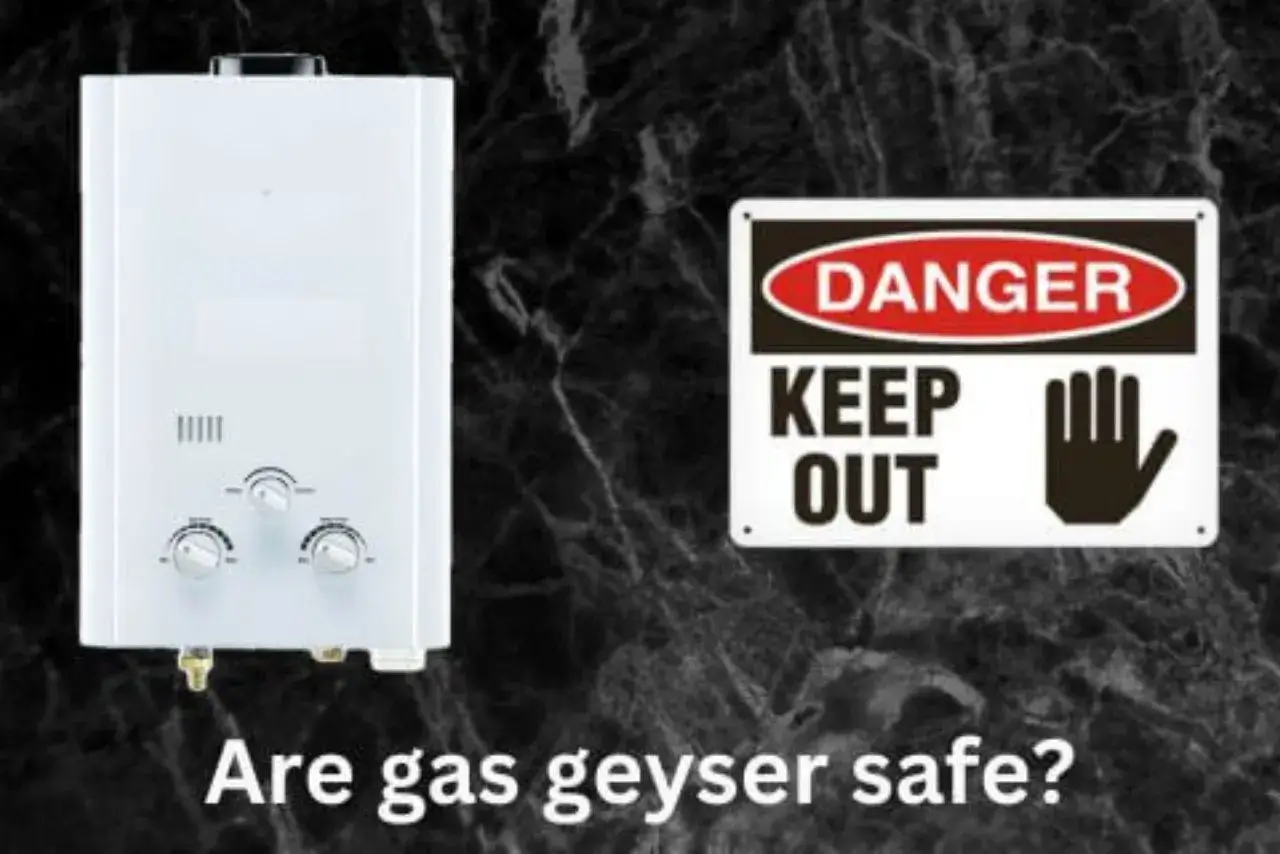
Yes, absolutely, gas geysers are dangerous and health-hazardous. Gas geyser comes at a low price, and it is economical to use with subsidized LPG gas. But the significant risk is involved in gas geyser usage. We do not recommend gas geysers at all. Prefer to use electric geysers instead.
Why trust this guide: This article is written by Abdul Khader, who has spent over 4 years installing and repairing both gas and electric geysers in Indian homes. The safety information below draws on that experience plus published medical guidance on carbon monoxide exposure, including the US CDC.
Quick answer: Yes, a gas geyser installed or ventilated incorrectly can produce enough carbon monoxide to be fatal. The risk isn’t theoretical, it’s why we recommend electric geysers for most homes, and if you do use a gas geyser, why installation and ventilation aren’t optional details.
Try to choose the right geyser by answering simple questions without reading any Buying Guide.
Can a Gas Geyser be Dangerous to Life
Gas geysers work by heating water. Gas burns make flame/fire in the gas compartment, but take LPG from the cylinder and oxygen from the inflow fan, eventually from the atmosphere.
The Gas burns up the small tank existing above it and heats up the water. During this combustion process, along with LPG, the geyser consumes the oxygen present in the bathroom, at the same time it produces colour and odourless, poisonous gas Carbon Monoxide.
Within minutes of exposure to Carbon Monoxide, victims are poisoned and rendered unconscious. Here is an Indian Express post about a recent death, where a gas geyser is being considered as a cause.
Symptoms of Carbon Monoxide Poisoning
Knowing the early signs can make the difference between stepping outside and staying in a dangerous bathroom. According to the CDC, the most common symptoms are:
- Headache, often the first sign
- Dizziness or weakness
- Nausea, vomiting, or an upset stomach
- Confusion or difficulty concentrating
- Chest pain or shortness of breath
These symptoms are easy to mistake for the flu, which is exactly what makes carbon monoxide dangerous. One clue that points to CO rather than illness: if everyone in the bathroom or nearby feels the same symptoms at the same time, and they ease up once you are outside, that is a strong sign it is the geyser, not a virus.
What to Do If You Suspect Carbon Monoxide Poisoning
- Get to fresh air immediately, open a window or step outside. Do not wait to see if symptoms pass.
- Turn off the gas geyser if you can do so quickly and without going back into a closed, fume-filled space.
- Call emergency services (108 or 112 in India) if symptoms are severe, or someone has lost consciousness.
- Do not go back into the room until it has been properly ventilated and the geyser has been checked.
A battery-powered carbon monoxide detector, inexpensive and widely available online, gives you an early warning before symptoms even start, and is worth having in any bathroom with a gas geyser.
However, we are using LPG in the kitchen, but when there is room for the gas to escape, nothing serious happens. Whereas gas geysers are installed in small-sized bathrooms with a lack of proper ventilation for air passage, an exhaust fan prevents oxygen shortage and reduces the odour with less Carbon Monoxide.
People can’t recognize the poisonous gases and breathe Carbon Monoxide gas, get unconscious, and even cause death. Even though many think, placing an LPG cylinder outside the bathroom makes it safe. But it’s not. LPG combustion takes place inside the geyser, which is installed in the bathroom.
Gas geysers can be a fire hazard if not used and maintained correctly. A gas leak, malfunctioning parts, or incorrect installation can cause gas geysers to catch fire and potentially cause significant damage or injuries.

Popular Geyser Articles
- Reasons Why a Geyser Could Burst
- What is Gas Geyser?
- How to Use an Instant Geyser?
- Which Geyser Consumes Lowest Electricity?
- Is Gas Geyser Legal in India?
Discussing Gas Geyser Problems
After so many health risks, if you still want to use a gas geyser, our suggestion is to place a gas geyser as well as an LPG cylinder in a very well-ventilated area, like a courtyard or balcony, and connect the water line to the bathroom tap.
In case of LPG leakage or combustion gas, Carbon Monoxide easily passes into the atmosphere. Several Indian newspapers have reported deaths linked to gas geysers installed in unventilated bathrooms over the years, and it’s worth searching for recent local news on this before assuming it could not happen in your area.
Precautions to Take While Using Gas Geysers Dangerous
- A gas geyser should be installed in an adequately ventilated area. Avoid installing in small, confined, low-airflow spaces.
- Keep the gas geyser at a height where the pilot flame is clearly visible; it is easier to monitor the status of the geyser and take appropriate action if necessary.
- Always make sure the gas geyser is turned off before leaving home.
- Never, ever leave the gas geyser turned on for a long time.
- Never keep flammable items like kerosene, petrol, or acid-based bathroom cleaners near the geyser.
If, after weighing all of this, you still want to use one, our Geyser Installation Guide covers correct ventilation setup in detail, and Is Gas Geyser Legal in India? covers the certification and supplier terms worth checking first. If you are still deciding between the two types altogether, see Gas Geyser or Electric Geyser: Which is Better?
Frequently Asked Questions
Can an exhaust fan alone make a gas geyser safe in a bathroom?
It helps reduce risk but is not a complete solution on its own. The safest setup keeps the gas unit itself outside the bathroom entirely, with only the hot water pipe running in.
Is it safe to run a gas geyser for a short shower with the door closed?
No. Carbon monoxide can build up within minutes, and a short shower does not guarantee a short exposure time, especially in a small, sealed bathroom. Keep the door from sealing fully shut and ensure real airflow whenever it’s running.
Do all gas geysers pose the same risk?
No. Models with a Flame Failure Device and an Oxygen Depletion Sensor (ODS) shut off automatically if oxygen levels drop, which meaningfully reduces risk compared to a basic unit without these features. It’s still not a substitute for correct installation and ventilation.
Related Searches
People researching this topic also search for: gas geyser carbon monoxide poisoning, gas geyser death news India, gas geyser safety precautions, gas geyser ventilation requirement, oxygen depletion sensor geyser, gas geyser fire hazard, and symptoms of carbon monoxide poisoning at home.