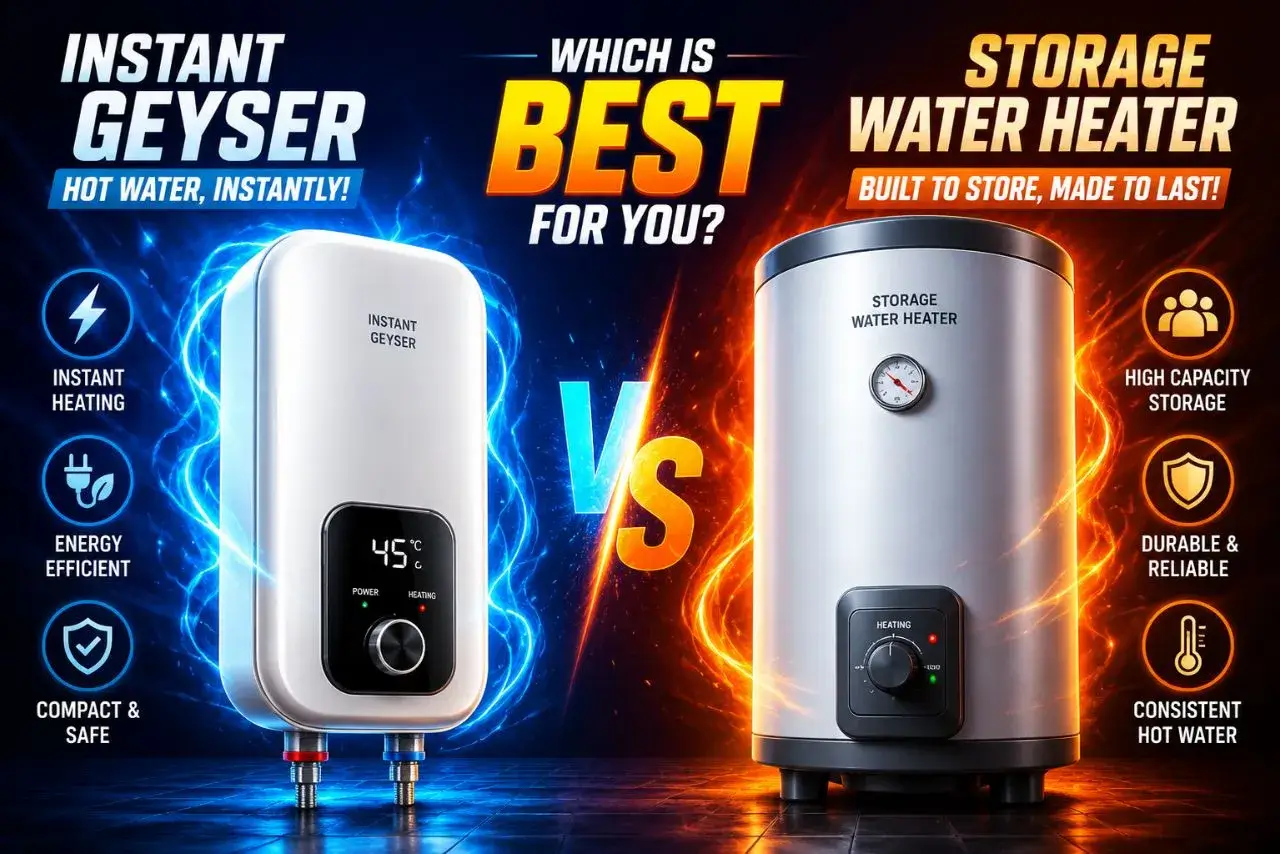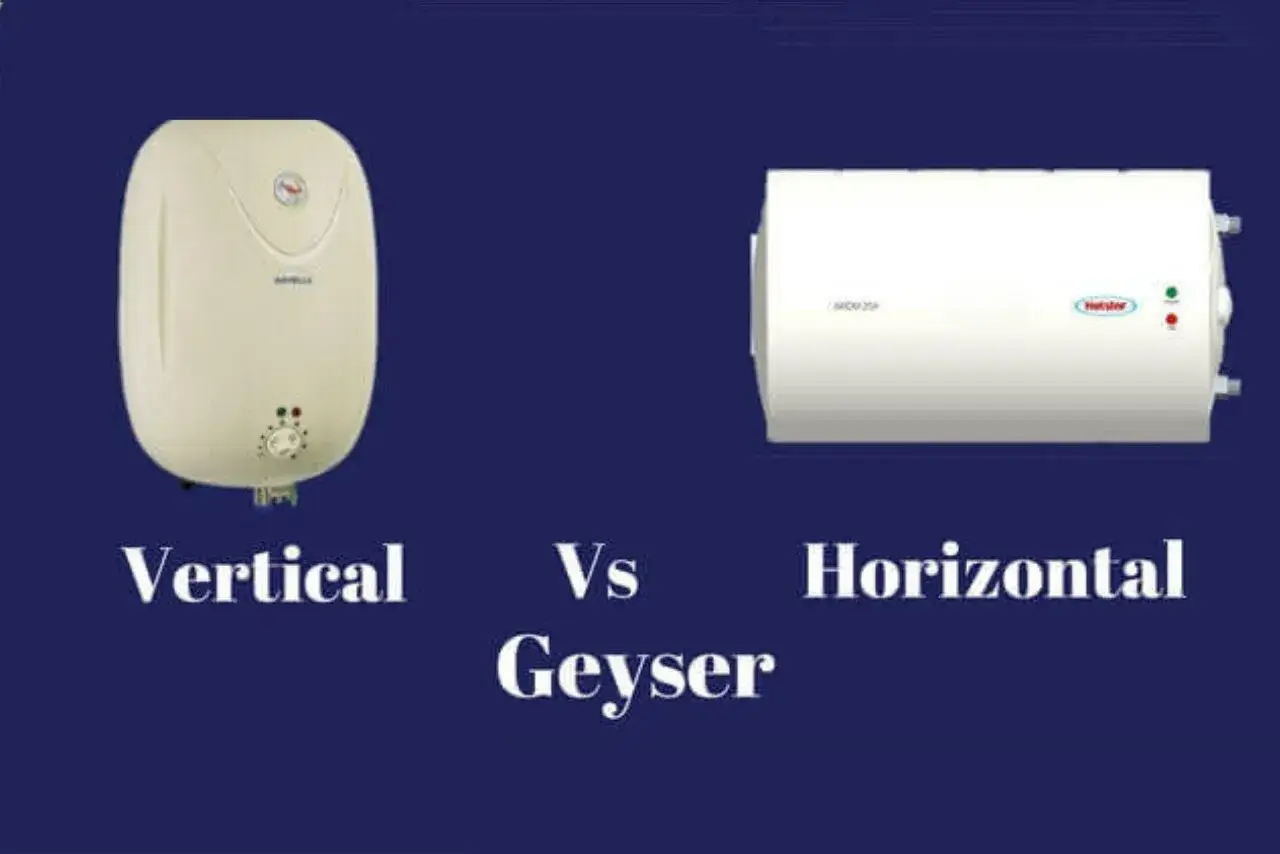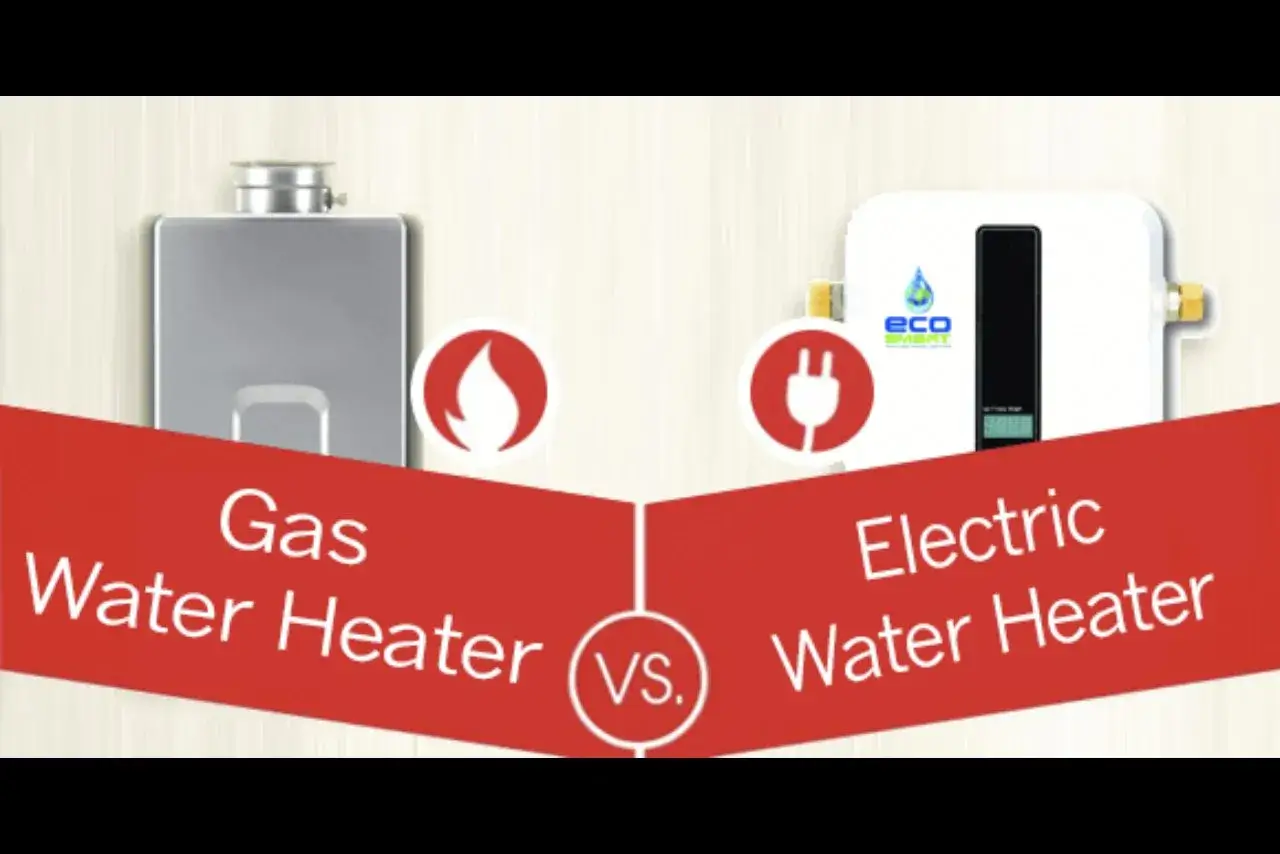
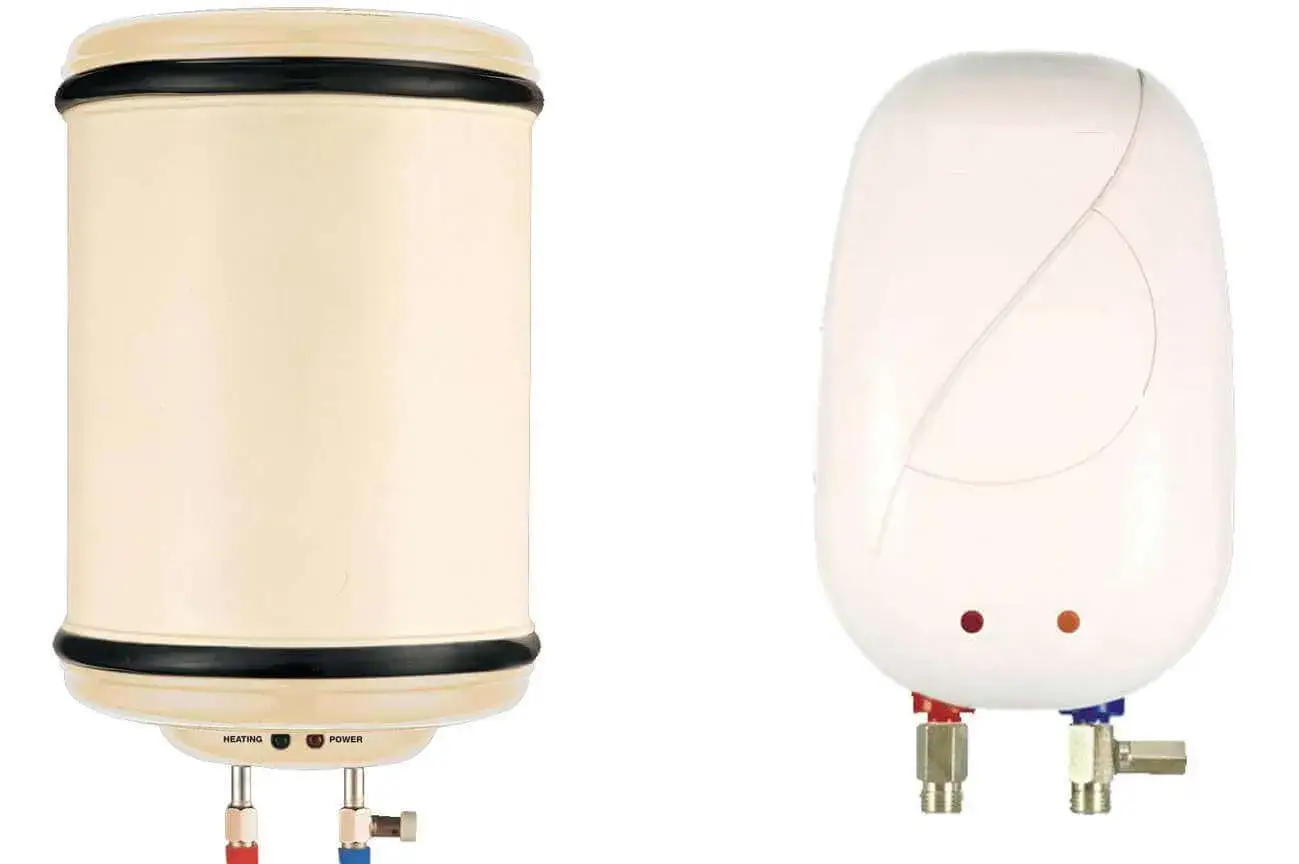
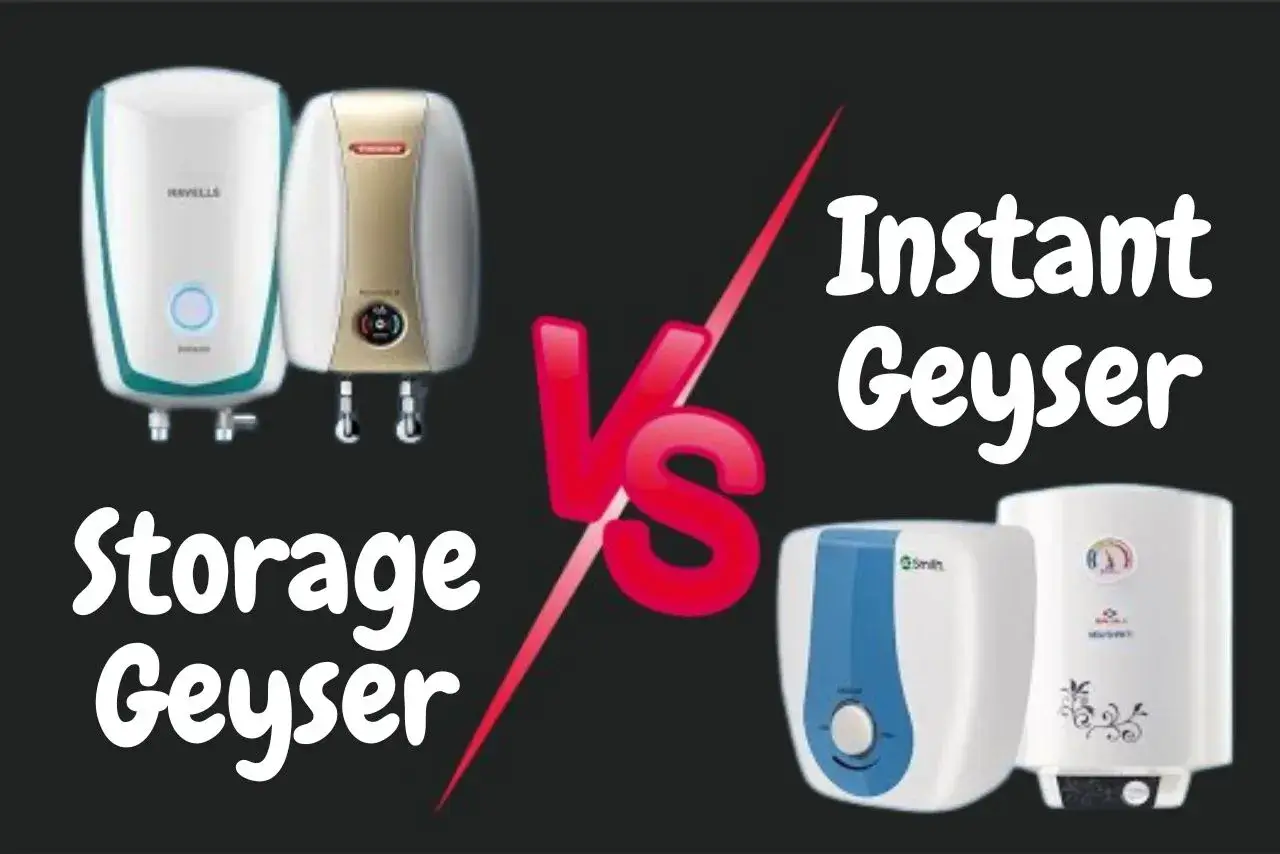
Deciding between an Instant geyser vs storage geyser is a challenging decision. There are various parameters to consider, like the purpose of hot water, geyser cost, water heating cost, and space availability in the bathroom. In this comprehensive guide, we are furnishing all the details.
Try the right geyser by answering simple questions without reading any Buying Guide.
Why trust this comparison: This guide is written by Abdul Khader, who has spent over 4 years installing and repairing both instant and storage geysers across Indian homes. The numbers below reflect what actually happens in daily use, not just spec-sheet claims.
Quick answer: If you live alone or only need hot water for a kitchen sink or wash basin, an instant geyser is enough. If you’re bathing with a bucket or shower, sharing hot water across a family, or live somewhere winters get cold, a storage geyser is the safer choice.
| Your Situation | Better Choice |
|---|---|
| Living alone, kitchen or wash basin only | Instant geyser (1–3L) |
| Couple or small family, bucket baths | Storage geyser (10–15L) |
| Family of 4 or more, shower use | Storage geyser (25L) |
| Cold-climate region, winter mornings | Storage geyser, higher capacity |
| Limited wall space or old house wiring | Instant geyser |
| Multiple bathrooms used at the same time | Storage geyser, one per bathroom |
| Feature | Instant Geyser | Storage Geyser |
|---|---|---|
| Wall space | Breaks during the bath. Geyser releases a maximum of 6 liters of water and needs to wait for more water during bathing | It occupies a large wall-mounted space |
| Delay | Hot water comes immediately when you switch on the geyser | Need to wait up to 5 minutes for water to heat up |
| Convenience | A little less, the 10-liter storage geyser price is 6K – 8K | No breaks during the bath, get all the water before the bath |
| Geyser Price | A little higher, the 6-liter instant geyser price is 6K – 8K | Considered little more than hot water is used after some time. |
| Water heating cost | Considered less as hot water is used immediately. | Bathing using a bucket and bathing using shower |
| Best suitable for | Washing kitchen utensils, hand washing, and bathing using bucket | Bathing using a bucket and bathing using a shower |
| Available geyser size | 1, 3, 6 and 10 liters | 6 – 35 liters |
| Life span | Considered little high as there is no water tank | Considered little low |
| Example | Crompton InstaBliss 3-L Instant geyser | Bajaj 15L storage geyser |
Instant Water Geyser
Instant water geysers are the perfect solution as they do not have any storage or water tank; therefore, no opportunity for heating additional water or wasting hot water. In addition, you have to switch them on before use and also switch them off without any difficulty after use. The electricity unit utilization is less, even though there is exceptionally high wattage. This sounds great from the perspective of an individual, but it may not be good for the power grid.
Popular Geyser Articles
- Gas Geyser or Electric Geyser Which is Better?
- How to Calculate Geyser Size
- Geysers for Hard Water
- Can we Use Instant Geyser for Bathroom?
- Geyser Buying Guide
Advantages of Electric Instant Water Geysers
Electric instant water geysers come with a lot of benefits. From lowered operating costs and increased efficiency to extended lifespan and space savings, look out for why electric instant water geysers are the perfect choice.
Electric Instant Geyser Price and Operating Costs
The 6-liter electric instant geyser price is around Rs. 6,000 to 8,000. Whereas a 10-liter storage geyser price is around 6,000 to 8,000. But it is considered that electric instant geysers consume less electricity as hot water is used immediately.
How much money and energy I will accumulate will be the first thought on electric instant water geysers. In fact, you will pay more at the initial stage to buy an electric instant water geyser and put all the necessary plumbing work in place.
However, your operating cost will increase due to the upfront costs. With an electric instant water geyser, you do not have to waste power on heating the water you are not going to use.
Electric Instant Water Geyser Lifespan
The lifespan of an electric instant water geyser is estimated to be longer than that of a typical storage water geyser. This is because there is a small water tank in electric electric instant geyser.
That is a huge replacement you are saving, if you are planning to dwell in your home for some time. On the other hand, it is good to pay for it in advance for the general cost savings of home ownership, despite the fact that you are not going to be in your home for that long.
Electric Instant Water Geyser – Space Savings
The potential space savings are one of the great advantages of instant geysers, even if you are not concerned about saving energy and money. The conventional water geysers with 10 to 40 liters of capacity are normally tall and wide. This large metal tank can occupy valuable space. An instant water geyser size, in contrast, may be the size of a huge computer that occupies little wall space
Disadvantages of Electric Instant Geyser
The rate at which instant water geysers draw electricity at any point in time is extremely high, since they have to make water available at a high temperature considered necessary. Consequently, a storage water geyser may be rated at 2 kW, while an instant water geyser is rated at 3 to 4.5 kW. An instant water geyser puts more load on the power grid because it heats water immediately.
Electric Instant Water Geyser – Limited Output
With an instant water geyser, you will have no cause to run out of hot water whenever you need it, as contemporary small tanks also heat up the added supply very fast. Whereas a full-size storage water geyser storing 10 to 35 liters of hot water at a time will keep your laundry, showers, as well as other hot water requirements appropriately fulfilled for some time.
A instant water geyser has an all through limit, capable of supplying a few liters of hot water all the time and at a time. As a result, you need to take breaks during the bath. Geyser releases a maximum of 6 liters of water and needs to wait for more water during bathing.
Gas Instant Geysers
A conventional storage gas water geyser uses many liters of LPG, while an instant water geyser may need fewer electricity units to perform the same task because it heats up your water on demand. Do you read Gas Geyser or an electric Geyser Which is Better? For more information.
You have to make sure that your electric system is equal to the task if you are thinking of switching to electric instead of gas. The price of electricity is usually double that of LPG in many areas as well. On this note, you will also need to think about the cost of energy. Please read How much electricity does a geyser consume for more information on electric geyser electricity consumption.
Water Geyser Size and Electricity Consumption
Your geyser electricity consumption will depend a lot on your hot water usage, which is why it is very important to buy the right-sized water geyser. The lesser hot water consumed in your household, the lesser will be electricity you will use up. Therefore, it is essential to opt for the right-sized water geyser that meets your requirements.
The smaller your water geyser, the better. Furthermore, it is better to switch on the water geyser before use and also switch it off as soon as you are through.
We always suggest making use of less water and saving water for all purposes. If you bathe in a tub or shower, more water of about 25-30 liters, is necessary, while you will need less water of about 15 liters, if you bathe using a bucket. Please read Can we use instant water heater for bathroom? for more information.
However, a 6, 10, or 15-liter storage water geyser is generally enough for such use. In cold or tremendously cold places during winter, a 15-liter water geyser might be enough, while a 10-liter or even 6-liter water geyser might be adequate in places where the room water temperature is not too cold. Please read How to calculate geyser size? for more information.
Instant Geyser vs Storage Geyser – Water Geyser Size and Electricity Consumption
Furthermore, a 6-liter or 10-liter storage water geyser may be good enough, if the water geyser is to be used in the kitchen and the consumption of water is less. Heating optimum water to conserve electricity should always be your goal. Smaller water geysers equally have smaller energy losses and consequently offer perfect water heating.
Also bear in mind that there are a small number of models of 6-liter or 10 liters storage water geysers that are also rated at 3 kW and not 2 kW. From a power system point of view, these are again not suggested. Bajaj, Havells, Racold, V-Guard, AO Smith, Kenstar, and Crompton are well-known brands with varying capacities like 10 ltr, 15 ltr, and 25 ltr. You can buy these geysers online from Amazon and Flipkart.
Power and Wiring: What Your Home Needs to Support
This is the part most people skip and regret later. Instant geysers draw 3 kW to 4.5 kW, which needs a dedicated 16A socket, thick enough wiring, and a properly rated MCB. Many older homes only have a 6A point near the wash basin, and running a high-wattage instant geyser off that kind of wiring is exactly what leads to overheated switches and melted sockets. Check our post on Why Does a Geyser Switch Melt to see what that looks like in practice.
Storage geysers are gentler on your wiring. Most run at 2 kW to 2.5 kW, which a standard 15A or 16A point can usually handle without any upgrade. If you’re set on an instant geyser, get an electrician to confirm your wiring and MCB rating before you buy, not after.
Which Handles Hard Water Better?
Storage geysers with glass-lined or Vitreous Enamel tanks cope with hard water for years because the coating resists scale buildup on the tank walls. Instant geysers have a narrow heating chamber, and that narrow path scales up faster, which slows heating and shortens the life of the element. If your area has hard water, either choose a storage geyser or plan on descaling an instant geyser more often. Our guide on Geysers for Hard Water covers how to protect either type.
Decision Checklist Before You Buy
Go through these questions before you pick a model:
- How many people will need hot water at the same time or back to back?
- What is the rating of the electrical point near your bathroom or kitchen, 6A or 16A?
- Do you have enough wall space to mount a storage tank, or is space limited?
- Do you need hot water in more than one room, such as the kitchen and the bathroom?
- Is your water supply hard, and are you prepared to descale the unit regularly?
- Are you comparing running cost based on how you actually use hot water, not just the electricity bill of a neighbor’s geyser?
Frequently Asked Questions
Can I use an instant geyser for a full shower?
You can, but only with a higher-wattage model (4.5 kW or more) built for shower use, and even then the flow rate is lower than what a storage geyser gives you. For a quick bucket bath alone, a smaller instant geyser works fine.
Does a storage geyser increase my electricity bill more than an instant geyser?
Not necessarily. A storage geyser has standing losses from keeping water hot, but it also runs at lower wattage. An instant geyser avoids standing losses but draws far more power the moment it’s switched on. Your actual usage pattern decides which one costs less, not the geyser type alone.
Can I install both types in the same house?
Yes, and it’s a common setup. An instant geyser in the kitchen for washing utensils, and a storage geyser in the bathroom for baths or showers, covers most households well.
Which one needs less maintenance?
An instant geyser has fewer parts and no large tank to service, so it generally needs less upkeep. A storage geyser needs periodic anode or tank checks, especially in hard water areas, but a good glass-lined tank keeps that to a minimum.
Is an instant geyser safe for a high-rise apartment?
Yes, and it’s often a good fit since it puts no water pressure load on the tank itself. For a full comparison on pressure and tank strength in tall buildings, see Geyser for High Rise Building.