It is an awesome experience to drink a hot cup of tea in winter. The joy will be totally turned off in case you need to wash the cup with cold water. Day by day, technology is improving kitchen appliances, and kitchen geysers are one of them. Thanks to kitchen geysers, now you can wash utensils with hot water, and that too immediately. Read more on how to choose the Best Kitchen Geysers.
Why trust this guide: This article is written by Abdul Khader, who has spent over 4 years installing and repairing geysers across Indian kitchens and bathrooms. The capacity and wattage guidance below is based on what actually works at a kitchen sink, not just spec sheets.
Try the right geyser by answering simple questions without reading any Buying Guide.
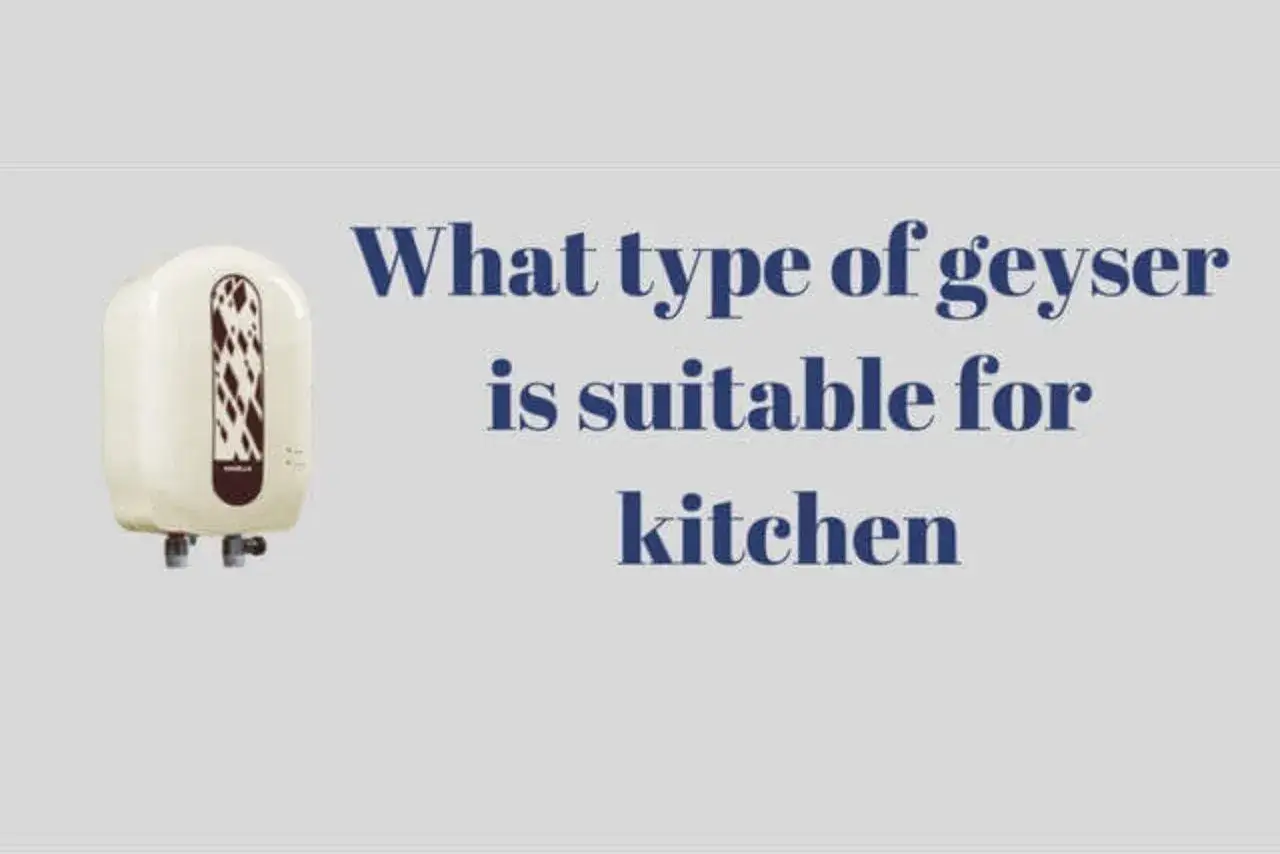
The short answer is for washing kitchen utensils, use instant geysers with a water reserve capacity of 1 Litre to 3 Litres. In other words, instant geysers with a tank capacity of 1 to 3 liters. Please see 6-litre instant geyser is good for the bathroom but not for the kitchen due to its large tank size. Small-sized instant geysers do the job of kitchen geysers perfectly well.
How Instant Geysers are Better than Storage Geysers for the Kitchen?
- Do not buy a storage geyser for the kitchen because storage geysers take some time to heat the water. You cannot wait five to ten minutes just for the water to get heated. Whereas instant geysers disperse the hot water immediately, making it a more attractive option.
- Kitchen walls are usually occupied by a water purifier, a kitchen chimney, and other stuff. There is a scarcity of wall space in the kitchen. In that case, the kitchen geyser should not take up more wall space. Storage geysers and tanks occupy significant wall space in the kitchen due to it’s large tank size. Instant geysers tank size is very small, which can fit even a small space on the kitchen wall.
1. Havells Instanio 3-Litre Instant Geyser
2. Bajaj Flora 3L-3KW Instant Water Heater 3 L Instant Water Geyser
3. Racold 1 L Instant Water Geyser (Pronto Neo SS 1V 3KW, White)
What Capacity Do You Actually Need?
Tank size isn’t the only number that matters for a kitchen geyser. Match the capacity to how the kitchen actually gets used:
| Capacity | Best For |
|---|---|
| 1 litre | Quick hand-washing or a single-person kitchen with light use |
| 3 litres | Most Indian kitchens: rinsing dishes, washing vegetables, general cleaning |
| 5 to 6 litres | Larger households or a kitchen with frequent, back-to-back utensil washing |
For a kitchen with heavy daily washing across a large family, a small storage geyser can sometimes work out better than stacking multiple instant cycles. If you’re weighing that trade-off, our Instant Geyser vs Storage Geyser comparison covers it in detail.
Wattage and Flow Rate: What Actually Matters
Instant kitchen geysers are usually rated between 3 kW and 6 kW. A higher wattage heats water faster and keeps the temperature steady even with the tap running continuously, which matters more for flow rate than the litre size printed on the box. For a single kitchen tap, look for a flow rate of around 2 to 3 litres per minute, that’s usually enough for washing dishes without the temperature dropping mid-task. If you live somewhere winters get cold, lean toward the higher end of that wattage range, since colder inlet water takes more power to heat.
Since kitchen geysers run at 3 kW or more, check that the socket near your sink is rated for it. If you’re not sure, our How to Use an Instant Geyser guide covers the wiring and switch-on basics.
Safety Features to Check Before Buying
- Auto cut-off / overheat protection: Shuts the unit off if the water gets too hot, which matters even more in a kitchen where the geyser might get left on by mistake.
- MCB-fitted plug: Cuts power immediately if there’s a fault, rather than relying on the kitchen’s main circuit breaker.
- Rust-resistant body: Kitchens are humid and near cooking oil and steam, so an ABS or stainless-steel body holds up better than plain metal.
- Low water flow protection: Stops the heating element from running if water flow drops too low, which protects the unit if your kitchen tap pressure is inconsistent.
Where to Install a Kitchen Geyser
Mount it as close to the tap as possible. Every extra foot of pipe between the geyser and the tap is water that cools down before it reaches you, wasting both time and electricity. Keep it clear of the cooking gas line and stove, and make sure there’s enough space around it for a service technician to reach the unit later. If your kitchen sink is small, a compact under-sink or wall-mounted 1 to 3 litre model is usually the easiest fit.
How to Increase Kitchen Geyser Water Pressure?
For kitchen usage, the warm water pressure must be optimum. Geyser’s low water pressure takes a lot of time to wash utensils, and eventually spikes the electricity bill. As a solution to low water pressure, use a Pressure-pump, an electric water pump which turns on/off when opens kitchen tap is opened. The pressure pump has to attach to the water inlet and its outlet to the geyser. The pressure pump pushes pressurized water into the geyser and increases warm water pressure.
Popular Geyser Articles
- Instant Vs Storage Geyser
- Geyser Installation Guide
- Geysers for Hard Water
- Instant Geyser for Bathroom?
- Geyser Buying Guide
Is it Safe to Drink Water from a Geyser?
It’s not a good idea to drink water that comes from a geyser, even if it’s been boiled. When water gets heated up in a geyser, yucky stuff like dirt, sediment, rust from pipes, and tiny bits of metal mix in with the water. And when the water is hot, it can dissolve even more of these gross things, like lead. So, even though it might be okay to use geyser water for taking a bath, geyser water is not safe to drink because it has a lot of impurities in it.
Frequently Asked Questions
Is a 1-litre kitchen geyser enough for washing dishes?
It’s enough for quick hand-washing or a single person’s routine, but most kitchens are better served by a 3-litre model since it keeps up with rinsing multiple dishes back to back.
Can I use a bathroom geyser in the kitchen instead?
You can, but a 6-litre or larger bathroom-sized instant geyser takes up more wall space than a kitchen needs and heats more water than you’ll typically use in one go. A dedicated 1 to 3 litre kitchen model is the more practical fit.
How much electricity does a kitchen geyser use?
Since it only heats water while the tap is running, a kitchen geyser has no standing loss the way a storage tank does. Actual cost depends on how many minutes a day it runs and its wattage, typically 3 kW to 6 kW. Our Which Geyser Consumes Lowest Electricity guide breaks the math down.
Do kitchen geysers need regular maintenance?
Yes, especially in hard water areas where mineral buildup narrows the heating chamber over time. Periodic descaling keeps heating fast and protects the element. See Geysers for Hard Water for how to handle it.