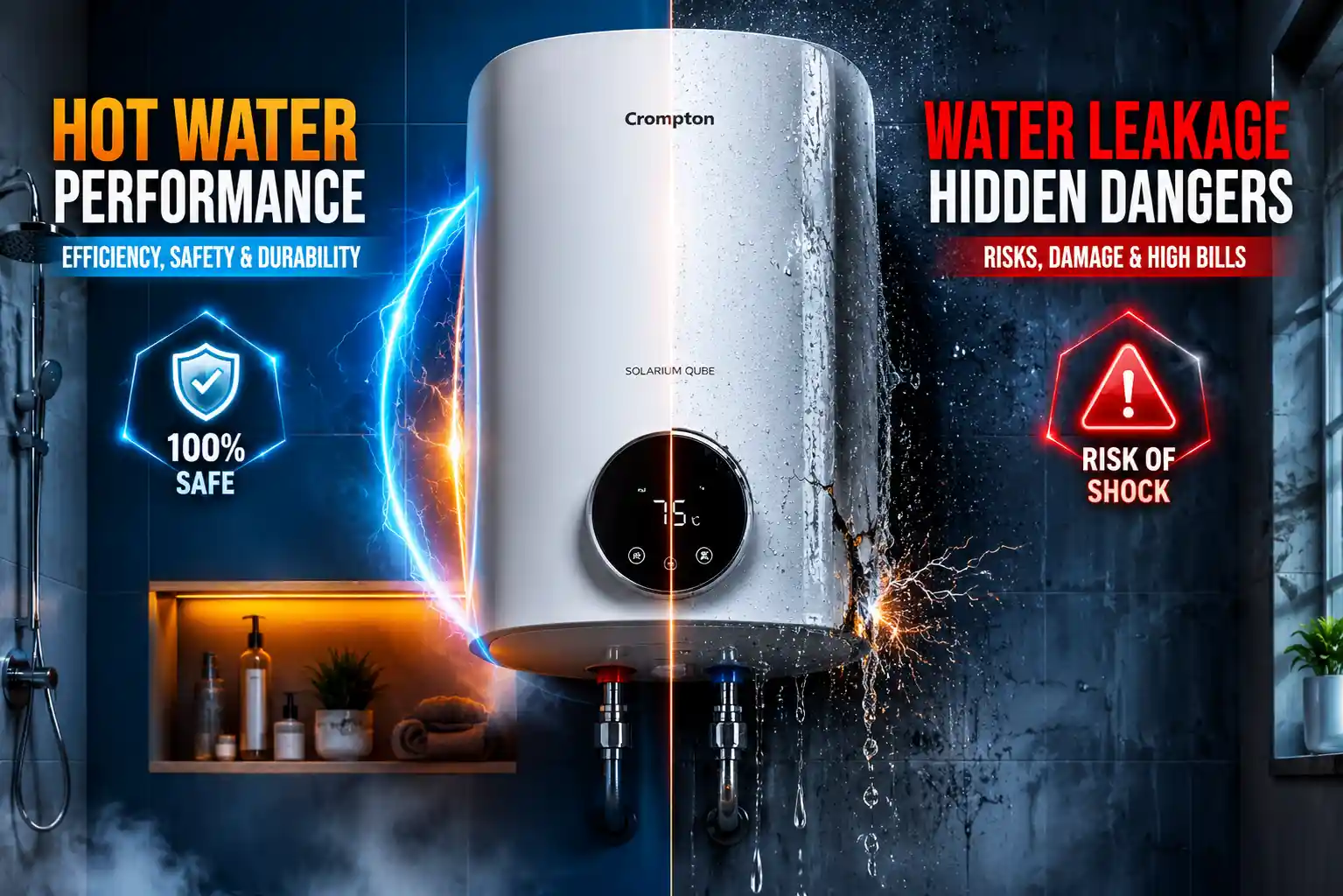
If you have left your geyser switched on longer than you meant to, the good news is that a working thermostat is designed to prevent anything catastrophic from happening in most cases. That said, leaving it on is still worth avoiding, both for your electricity bill and for the wear it puts on the thermostat and heating element over time. This guide covers what actually happens, how long is genuinely too long, and the one scenario, a geyser left on with no water in the tank, that is actually dangerous.
Why Trust This Guide: This article is written by Abdul Khader, who has spent over 4 years repairing geysers in Indian homes, including plenty of thermostats worn out by exactly this habit. The guidance below reflects what actually happens to a geyser left running, not just a reassurance that nothing will.
Quick Answer: With water in the tank and a working thermostat, a geyser left on will cycle on and off to hold its set temperature rather than overheat, but it wastes electricity and adds wear every hour it runs unused. Switched on with no water in the tank, it is a genuinely dangerous situation that can burn out the element within minutes.
Geysers

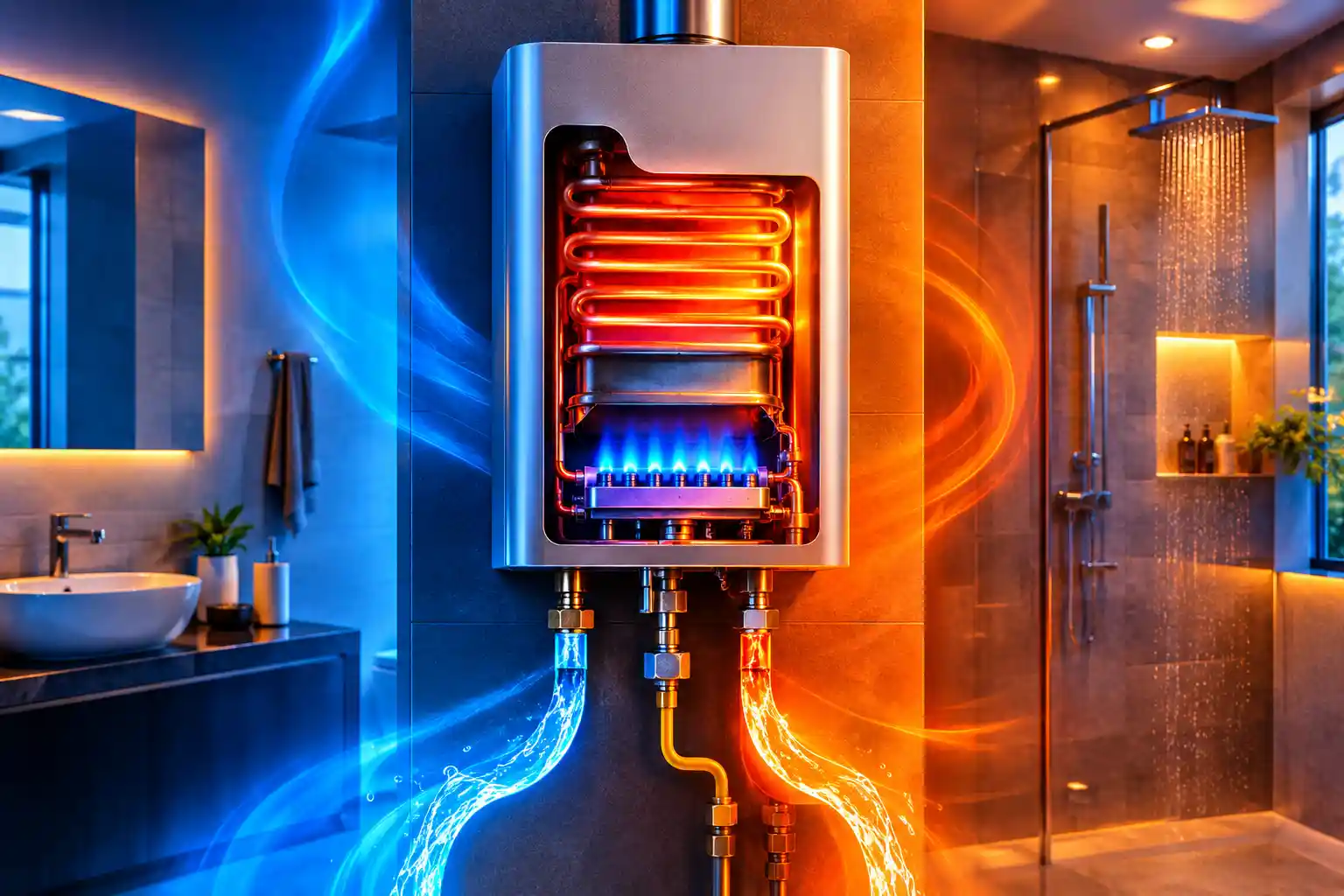
Geysers or otherwise known as water heaters are great appliances that provide us with hot water in basically no time. It heats the water so that we can have it from our taps without any efforts.
This makes them popular in these modern times and you will find one in most of the households. Geysers are crucial in our lives, especially during winters and for those who happen to reside in colder regions of the world.
Speaking of geysers, one of the most important parts in a geyser is a Thermostat. This device can be considered as life-saving as it offers something that we all can relax on.
With that said, thermostats are also prone to many damages and faults that may ultimately lead to ruining the geyser. And if you don’t resolve the thermostat problem, then your geyser is not much in use after all.
Understanding what the thermostat actually does is the key to understanding what happens when a geyser is left on, so it is worth covering briefly before getting to the main question.
Thermostat

A thermostat can be considered as the heart of the geysers feature list. Without this feature, many of us would’ve proscribed the use of geysers in the first place.
What this does is, it helps us to regulate the temperature of the best water heater that we will require when the geyser has done its job. Most of the individuals set a temperature on the thermostat without changing it again and again.
With that being said, some prefer to change the temperature according to the weathers and their needs as well as usage.
In basic words, the thermostat ensures that the geyser heats the water till the desired temperature is achieved and after that switches it off automatically.
Aforementioned, this part is vulnerable to many problems and should be repaired, otherwise, it can lead to geysers not working at all.
How Does a Thermostat Work?

Basically, the thermostat operates as a facilitator between the components. It ensures to stop heating the water when it is adequately hot or the desired temperature is reached. Similarly, when it detects that the water inside the geyser is cool then it starts the component and heats the water.
However, this happens exclusively after the element of the geyser has finished heating it. So to summarize what we’ve explained above in simple words, then…
A thermostat detects the temperature of the water that is stored in the geyser, once it gets cool then it automatically starts the geyser to reach the set or desired temperature. Once it reaches the temperature it automatically shuts down the geyser.
What Happens If Geyser is Left On?

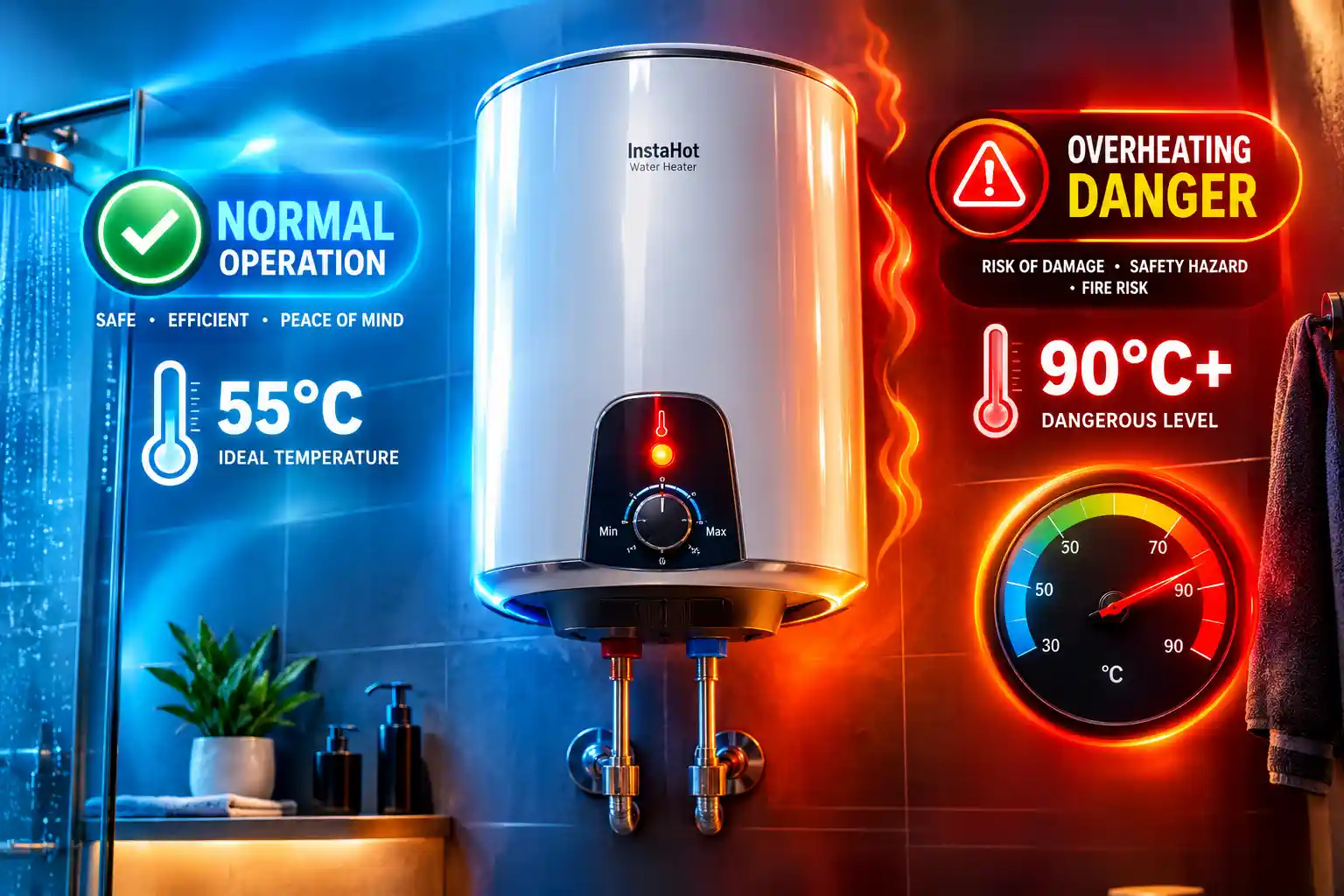
With water in the tank and a functioning thermostat, nothing catastrophic happens immediately. Once the set temperature is reached, the thermostat switches the element off, and it switches back on only when the water cools enough to need reheating. Almost all geysers have this safeguard built in.
That does not mean leaving it on is harmless, though. Every cycle the thermostat runs while the geyser sits unused is electricity spent on water nobody is using, called standing loss, and it adds wear to the thermostat and element over time. The impacts worth knowing are as follows.
- Higher Electricity Bills: Standing loss from an idle, hot tank adds up over hours and days. Our How To Reduce Geyser Electricity Consumption guide covers how much this actually costs and how to cut it.
- Faster Thermostat Wear: Constant cycling on and off puts more strain on the thermostat than a geyser switched on only when needed. A failed thermostat is also one of the things that can let a tank overheat if it fails stuck in the on position.
- Added Pressure on the Tank: A thermostat that sticks or fails while the geyser is left running lets the water keep heating past the safe point, which raises pressure inside the tank. See Reasons Why A Geyser Could Burst for how that failure chain actually plays out.
If forgetting to switch it off is a recurring problem, a simple smart plug with a schedule or a basic mechanical timer switch solves it without you having to remember at all.
What Happens If a Geyser Is Left On Without Water

This is the scenario that is actually dangerous, and it is different from leaving a full geyser running. If the tank is empty or has run dry, usually from a closed inlet valve, a blocked filter, or no water supply to the building, the heating element has nothing to transfer its heat into. It can burn out within minutes, and the thermostat, designed to read water temperature, is not reliably protecting you in this case the way it does with a full tank. The US Department of Energy’s Water Heating Overview covers the same standing loss and element protection principles that apply here.
Always confirm water is actually flowing before switching a geyser on, especially after any plumbing work or a period without water supply.
Why the Thermostat Does Not Reliably Protect an Empty Tank

A thermostat reads the temperature of the water around it. With no water in the tank, it has nothing accurate to read, so it cannot reliably trigger the same automatic cut-off that protects a full tank. That gap is exactly why running a geyser dry is treated as a distinct, more serious risk rather than just a longer version of leaving it on normally.
If you suspect this has already happened, our No Water Coming From Geyser guide covers the symptoms and what to check next.
How Long Is Too Long

| Duration Left On | What Actually Happens |
|---|---|
| Up to 30 minutes | Normal heating time for most storage geysers, nothing to worry about |
| A few hours unused | The thermostat cycles the element on and off, wasting electricity on standing loss but not damaging anything on its own |
| Overnight or all day | Noticeably higher bill, and more cumulative wear on the thermostat from repeated cycling |
| Several days, such as while on vacation | Best switched off entirely at the socket or breaker, both for the electricity cost and in case a fault develops while nobody is home to notice |
| Left on with no water in the tank | Genuinely dangerous, the element can burn out within minutes. See the section above |
Frequently Asked Questions
Can I Leave My Geyser On Overnight?
You can without immediate harm if there is water in the tank, but it is not a good habit. It adds unnecessary standing loss to your bill and extra wear on the thermostat for no real benefit over switching it on 15 to 20 minutes before you need hot water.
Does Leaving a Geyser On Cause It to Explode?
Not under normal conditions with a working thermostat and pressure relief valve. The real risk comes from a failed thermostat combined with a stuck or neglected pressure valve, which is a maintenance issue more than a simple “left it on” issue. See Reasons Why A Geyser Could Burst for the full picture.
Should I Switch Off the Geyser When I Go on Vacation?
Yes. For anything longer than a day or two away, switch it off at the socket or breaker rather than just leaving it idle, there is no benefit to leaving it running and nobody home to notice if something goes wrong.
Take-Away Message
A geyser left on for a while with water in the tank is not an emergency, the thermostat is doing its job. But it is not a free pass either, every hour it runs unused costs you money and puts extra wear on parts that are not free to replace. If your thermostat is not switching the geyser off the way it should, get it checked by a technician rather than waiting, see our Geyser Repair guide for what that typically costs.
The habit worth building is simple: switch the geyser on shortly before you need hot water, and switch it off once you are done, rather than leaving it running in the background. It costs nothing to do and saves both money and wear over time.
Related Searches
People researching this topic also search for: geyser left on all night safety, geyser left on without water danger, geyser timer switch benefits, geyser thermostat failure signs, how much electricity does an idle geyser use, geyser left on for a week, and geyser safety tips for vacation.