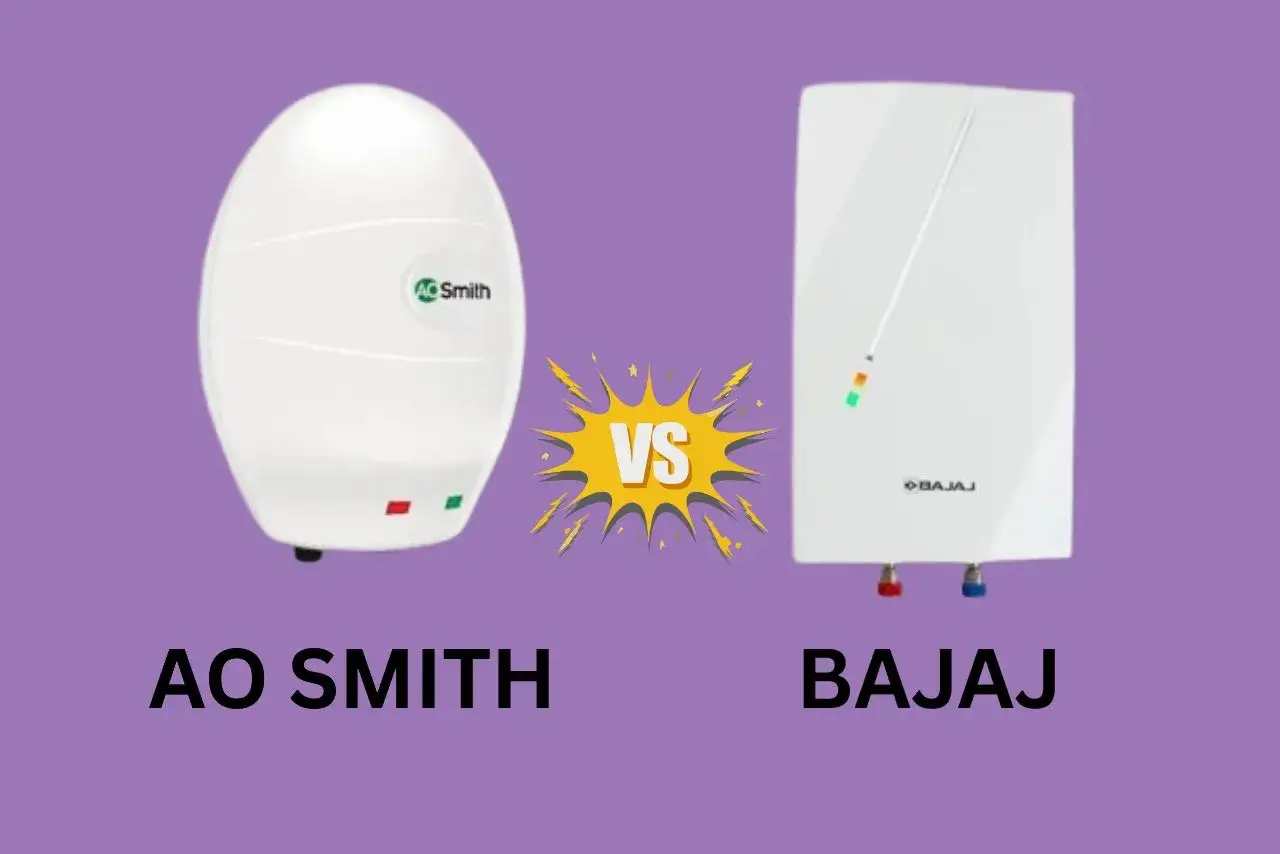
Back when I first started comparing AO Smith vs Bajaj Geyser, I honestly thought a geyser was a geyser, and they’re all the same, right? Definitely not. If you’ve ever taken a morning shower and the hot water ran out midway, you already understand the real difference between brands like AO Smith geyser and Bajaj geyser.
I’ve lived in homes with hard borewell water, soft municipal water, and everything in between. That experience is exactly why I started paying attention to things like geyser tank coating, glass-lined tanks, and geyser heating performance. You wouldn’t believe how much water type changes the lifespan of a storage geyser.
Let’s dive in and take a real look at choosing between AO Smith vs Bajaj Geyser for Indian homes.
Contents
- 1 AO Smith vs Bajaj Geyser Brand Reliability and Reputation
- 2 Heating Performance and Efficiency
- 3 Hard Water Handling and Tank Protection
- 4 AO Smith vs Bajaj Geysers | My Real-World Experience
- 5 Which One Should You Choose?
- 6 Hard Water vs Soft Water | Which Brand Handles It Better
- 7 AO Smith vs Bajaj | Side-by-Side Comparison Table
- 8 Frequently Asked Questions ( FAQs ) on AO Smith vs Bajaj Geyser
- 8.1 1. Which lasts longer, AO Smith or Bajaj?
- 8.2 2. Is Bajaj good for everyday use?
- 8.3 3. Which geyser is more power-saving?
- 8.4 4. Which brand is easier to repair in India?
- 8.5 5. Does tank coating really matter?
- 8.6 6. Do I need a water softener?
- 8.7 7. Which geyser is better for cold climate regions?
AO Smith vs Bajaj Geyser Brand Reliability and Reputation
When I first installed an AO Smith geyser, I remember feeling like I was getting something solid and long-lasting. The build gave off a sturdy feel, especially the glass lined tank, which really helps against corrosion.
Over a few years, even with hard water friendly geyser conditions, I noticed it stayed clean inside with much less scaling. This matters a lot when you’re relying on geyser durability.
On the other hand, I’ve seen Bajaj geyser units in so many Indian homes because they’re affordable and easy to find. You can walk into almost any local shop and spot a Bajaj model sitting on the shelf, ready to buy.
The Bajaj service network is also famously widespread, meaning repairs and parts are easier to get.
So here’s my Honest take based on real usage:
- AO Smith geyser review from my experience: feels premium, strong performance, keeps water hot longer
- Bajaj geyser review from daily use: reliable, cost-effective, perfect for budget buyers
- If you want something that will work quietly behind the wall for years, AO Smith vs Bajaj geyser tips slightly in AO Smith’s favour
- If you want a simple system that gets the job done without spending too much, the Bajaj geyser absolutely makes sense
One thing I’ve learned is that people sometimes underestimate the importance of after-sales support. For instance, in many tier 2 and tier 3 cities, Bajaj service centre accessibility beats AO Smith service support.
I remember once in Pune, I needed a thermostat replacement for a Bajaj model, and it was done in a single day. But for the AO Smith geyser, I once waited a week for a technician. So if you live outside large cities, this matters.
But in terms of reliability, corrosion resistance, and water heating consistency, whenever I’m setting up a long-term bathroom system for a medium or large family, I usually lean toward AO Smith vs Bajaj Geyser in favour of AO Smith.
So, summarising this part in a friendly way:
- If budget is your main priority, go, Bajaj
- If long-term reliability matters, go, AO Smith
- If you’re in a smaller city and want easy service access, Bajaj wins
- If you have hard water, the AO Smith glass lined tank is a blessing
That’s my real-world, lived-in-Indian-homes comparison.
Heating Performance and Efficiency

Heating speed is the one thing you feel every day. When I switched from a Bajaj storage geyser to an AO Smith vs Bajaj Geyser comparison in real time, the biggest surprise was the heating speed.
AO Smith geyser models seem to heat faster and retain heat longer. In the morning, when multiple people shower one after another, the reheating time matters. I’ve noticed that with AO Smith, the hot water doesn’t drop as quickly, probably due to insulation and the geyser energy rating.
Now here’s the fun part. Bajaj isn’t slow. For quick 2-person usage, the Bajaj geyser price in India gives good performance, especially in instant geyser models. For kitchens, it’s great. But for bathrooms, especially with bucket use or shower use in winter, I found AO Smith more consistent.
There’s another detail I learned over time. Geysers with copper heating element tend to work efficiently but can scale faster with hard water. Meanwhile, glass coated tank models keep efficiency more stable over time.
If we’re talking numbers in real life:
- For a 15L AO Smith storage geyser, water heats in around 12–15 minutes
- For a 15L Bajaj storage geyser, it’s around 15–20 minutes
- With the instant geyser, both are fast, but the Bajaj tends to be cheaper
This difference might look small on paper, but multiple showers in winter mornings quickly highlight the gap.
Also, electricity bills are influenced by tank insulation and how long the heat stays inside. With AO Smith, I noticed water stayed warm for longer even after the power cut off. That reduces reheating cycles and daily energy use.
And from real frustration experience:
Once, in winter, our older Bajaj tank lost heat quickly, and we had to wait between showers. It was annoying. With AO Smith, I saw a much better hot water recovery rate.
To summarise the performance reality:
- AO Smith geyser heats faster
- AO Smith retains heat longer
- Bajaj geyser is fast enough for small households
- For bigger families, AO Smith gives more consistent heating
The takeaway is that if heating speed matters for your daily schedule, AO Smith handles it better.
Hard Water Handling and Tank Protection
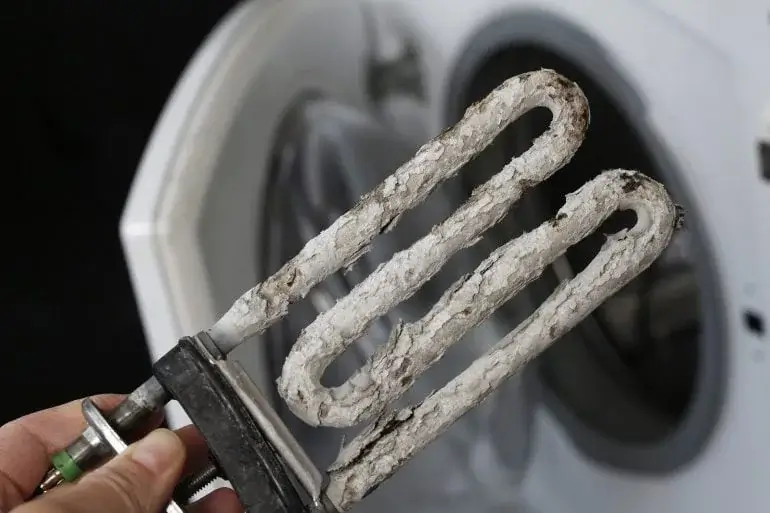
I’ve lived in places where the tap water leaves white calcium stains on pipes, and let me tell you, hard water absolutely destroys a geyser from the inside if the tank isn’t prepared for it. This is where I’ve personally seen a huge difference between AO Smith vs Bajaj geyser.
When I had a Bajaj model in a hard water area, the heating element would get scale buildup, sometimes even producing popping or crackling noises. It still worked, but the heating slowed down, and electric use increased.
With AO Smith, the glass lined tank and anode rod helped reduce corrosion and scaling. After opening the tank once during maintenance, I was shocked to see that the inside was much cleaner than expected.
That’s when I finally understood why people prefer AO Smith geyser in areas with borewell water.
Here are real, practical differences based on personal observation:
- AO Smith uses blue diamond or glass tank coating, which resists corrosion
- Bajaj geyser relies more on standard steel tanks with protective coating, which is good, but not as tough
- If your home uses borewell or tanker water, the AO Smith lasts longer internally
- If you have a municipal water supply with lower hardness, Bajaj works fine without issues
I also learned something else with time: using a water softener cartridge or pre-filter helps both brands. Even a cheap inline filter can stop heavy minerals from entering your storage geyser.
I’ve also seen servicing differences:
- AO Smith technicians often check the anode rod condition
- Bajaj technicians focus more on thermostat and heating coil issues
- With AO Smith, tank corrosion cases are less frequent
- With Bajaj, scale buildup is more common in hard water regions
My advice based on experience:
- If your bathroom fittings have white residue stains, choose AO Smith
- If your taps and tiles don’t show mineral marks, Bajaj is ok
Hard water can shorten a geyser’s life from 10 years to 3 years if internal protection isn’t good. That’s why tank coating and anode rods are not marketing gimmicks. They matter.
AO Smith vs Bajaj Geysers | My Real-World Experience
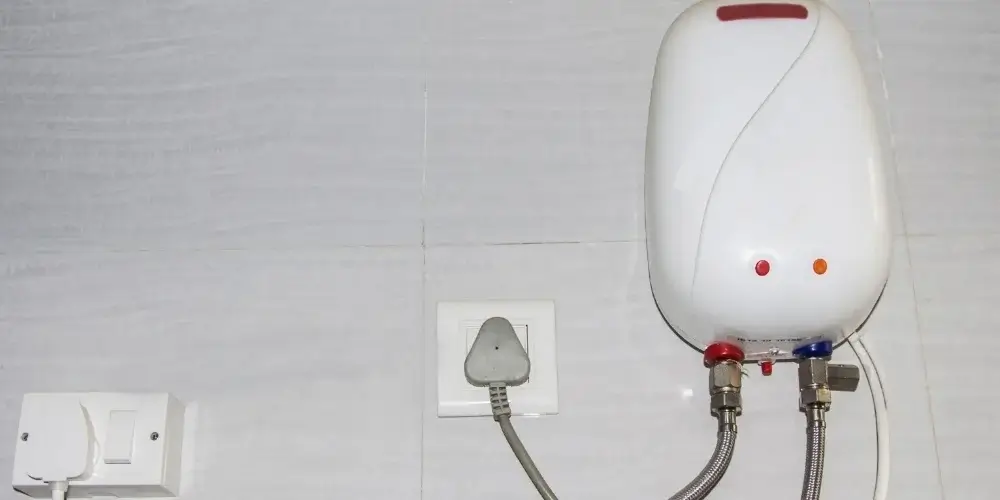
I’ve personally used both AO Smith geyser and Bajaj geyser in real Indian households, where water hardness, voltage fluctuation and long-term usage matter. I’ve spent years living with electric water heater systems, dealing with repair technicians, checking geyser durability, and understanding which brand actually stands up to everyday use. I’ll keep this practical and simple.
To begin, AO Smith usually focuses on strong tank protection with the blue diamond tank, while Bajaj focuses on price and easy access across India.
I’ve owned units from both brands and seen how they behave after 1, 3 and 5 years of usage. Based on actual life experience, not theory.
Build Quality and Materials
When touching and handling the units during installation, the AO Smith water heater feels heavier and more solid. Its blue diamond tank coating is very resistant to rust. This matters a lot if you live in an area with hard water or a salty borewell supply.
Bajaj uses typical steel tank protection with standard coating, which handles normal water fairly well but doesn’t survive extreme mineral content as effectively in my real use cases.
I’ve seen cases where Bajaj geyser tanks developed rust marks after around three to four years in hard-water zones. Meanwhile, the AO Smith tank stayed clean inside for longer periods. If your area has high TDS levels, go with the brand that handles mineral deposits more robustly.
Heating Performance and Electricity Usage

From my personal usage, AO Smith geyser heats water faster and retains temperature longer due to better insulation. I noticed that after switching off the unit, the water stays hot inside for a surprisingly long time.
Bajaj takes a bit longer to heat up, and in colder seasons, it may require higher energy consumption due to lesser heat retention.
If you want a practical guide:
- For faster heating: AO Smith
- For basic heating at low cost: Bajaj
- For homes with frequent hot water use: AO Smith
- For occasional bucket bathing users: Bajaj
Features and Technology
AO Smith offers things like:
- blue diamond tank
- smart temperature setting
- strong heat retention design
Bajaj offers:
- budget-friendly pricing
- simple controls
- Basic electric geyser safety features
I’ve also had fewer service calls with AO Smith. Static functioning and long-lasting heating elements gave a much more consistent experience during daily bathing routines.
Cost and Value Over Time
The Bajaj geyser is cheaper in the beginning. But if you factor in:
- tank replacement
- heating element wear
- leakage risk
- rust build-up inside the tank
Then AO Smith geyser becomes more economical in the long run. I’ve personally spent more on repairs for Bajaj models over time.
Which One Should You Choose?
If your area has hard water, or you want minimum maintenance and longer reliability, choose AO Smith.
If budget is more important and you don’t have heavy water minerals, Bajaj can serve your needs at a lower price.
Geyser Capacity Recommendation for Different Household Sizes

From my daily use and real-world observation, choosing the right geyser capacity depends mainly on the number of people and bathing style.
Here’s my personal breakdown:
- For a single person or quick bath usage
Go with a 6L or 10L instant geyser - For a 2–3 member family with bucket bathing
Go with a 15L storage geyser - For a 3–5 member family or shower usage
Go with a 25L storage geyser - For high-demand households
Consider multiple electric water heater units in different bathrooms
Selecting the correct size prevents unnecessary energy use and ensures consistent hot water flow.
Hard Water vs Soft Water | Which Brand Handles It Better
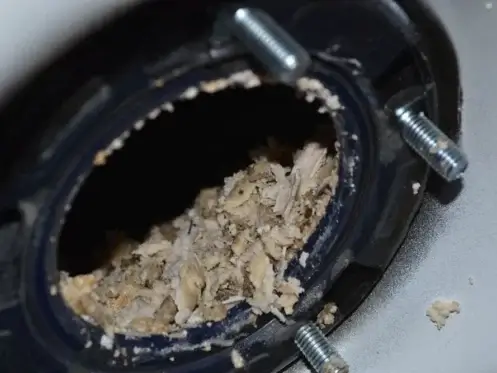
I’ve lived in places with both soft municipal supply and hard borewell water, and this difference affects geyser life more than most people realise.
With hard water, the minerals stick to heating elements and tank interiors. In this scenario, AO Smith performs much better, especially with the blue diamond tank and strong anti-rust protection.
With soft water, both the AO Smith geyser and the Bajaj geyser work fine. If your area has low TDS water, you can safely choose Bajaj and save money.
If you are unsure about water quality, buy a simple TDS meter and check. It’s a small device, but it helps you make a long-term decision.
AO Smith vs Bajaj | Side-by-Side Comparison Table
Here’s a clean table based on my real use and observation:
| Category | AO Smith geyser | Bajaj geyser |
| Heating speed | Faster | Moderate |
| Tank protection | blue diamond tank | standard coated steel |
| Best for | hard water regions | soft water or moderate TDS |
| Price | Higher | Budget-friendly |
| Durability | Longer lasting | Average life span |
| Maintenance calls | Fewer | More frequent in mineral-heavy regions |
| Heat retention | Strong | Standard |
This table should help you quickly decide which water heater fits your home.
Frequently Asked Questions ( FAQs ) on AO Smith vs Bajaj Geyser
1. Which lasts longer, AO Smith or Bajaj?
From my experience, AO Smith lasts longer, especially in harder water zones.
2. Is Bajaj good for everyday use?
Yes, for normal water quality and regular bucket or shower usage, the Bajaj geyser works fine.
3. Which geyser is more power-saving?
AO Smith geyser holds heat longer, which can reduce electricity usage over time.
4. Which brand is easier to repair in India?
Bajaj has wider service availability and cheaper parts.
5. Does tank coating really matter?
Yes. The blue diamond tank in AO Smith slows down rust and scaling significantly.
6. Do I need a water softener?
If your home uses borewell water with high mineral content, a softener helps extend tank life.
7. Which geyser is better for cold climate regions?
AO Smith maintains stored heat for longer periods in colder seasons.